
Just when the retro hardware community thought Taki Udon and the Retro Remake team were catching their breath following the mass production of the SuperStation one and the wildly disruptive MiSTer Pi, a new teaser has dropped that threatens to shake up the 16-bit market.
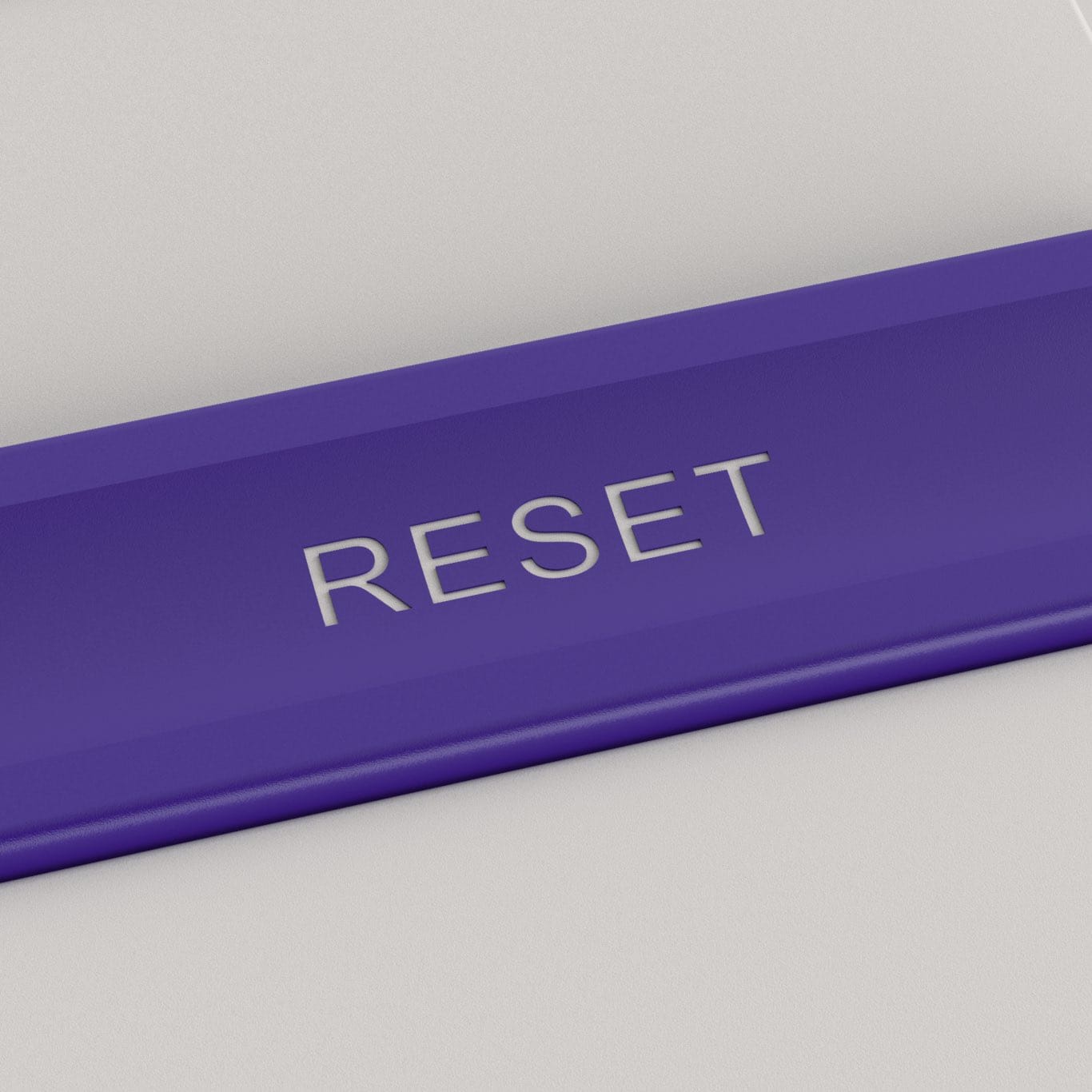
In a post shared across social media, Taki posted a single, razor-sharp macro render of a textured light-gray console chassis bearing an unmistakably iconic feature: a lavender-purple slider embossed with the word RESET. The accompanying caption was short, provocative, and left little room for misinterpretation: “It’s time to run it back. Codename SSNT/SuperFPGA.”
It’s time to run it back.
— Taki Udon (@TakiUdon_) October 8, 2026
Codename SSNT/SuperFPGA pic.x.com/waR3Zb8vD5
Decoding ‘SSNT’: A Direct Shot at the Super Nt Void
The codename SSNT / SuperFPGA is as unsubtle as it gets in the boutique retro hardware sphere. It is an immediate, transparent homage and challenge to Analogue’s legendary Super Nt—the cycle-accurate FPGA Super Nintendo that defined premium 16-bit gaming when it debuted in 2018.
Analogue officially retired the Super Nt in 2023 after a heavily publicized “final run” production batch. In the years since, the secondhand market for dedicated FPGA SNES hardware has turned predatory. On secondary platforms like eBay, boxed Super Nt units routinely change hands for anywhere between $400 and $600+, leaving retro enthusiasts with a frustrating dilemma: pay exorbitant scalper ransoms, settle for software emulation boxes (like Raspberry Pi builds or mini consoles with inherent frame latency and audio buffering quirks), or build an open-bench MiSTer stack that lacks a dedicated cartridge slot and classic living-room console aesthetics.

With “It’s time to run it back,” Taki appears primed to repeat the playbook that made the MiSTer Pi and SuperStation one such monumental community successes: stripping away artificial scarcity and high-end boutique pricing to deliver open, accessible FPGA hardware to actual players.
From MiSTer Pi to SuperStation one: The Track Record
To understand why this single render has set retro communities on Reddit, X, and Discord abuzz, one only has to look at Taki Udon’s trajectory over the past two years:
- The MiSTer Pi Disruption: For years, entering the MiSTer FPGA ecosystem required buying a Terasic DE10-Nano development board, which skyrocketed past $250–$300 following supply chain squeezes. Taki engineered the MiSTer Pi, manufacturing a fully compatible clone board that retailed at an unbelievable $99 base price, fundamentally democratizing cycle-accurate multi-system preservation.
- The SuperStation one (SS1): Designed alongside Retro Remake, the SS1 brought a dedicated, console-grade MiSTer-based PlayStation machine to living rooms. Equipped with native zero-latency PS1 controller ports, authentic memory card buses, expansion base docking (the optical disc SuperDock), and custom injection-molded shells, it proved that Taki’s team could deliver commercial-grade industrial design at scale.
Applying that same engineering philosophy to the 16-bit era with the SSNT is a natural evolution. Rather than treating FPGA as an elusive luxury novelty, Taki has consistently pushed to make hardware simulation cost-competitive with software-based mini consoles.
What Can We Expect from ‘SuperFPGA’?
While technical specifications remain tightly under wraps, several key architectural expectations can be drawn from the teaser and Taki’s design pedigree:
- Physical Cartridge Integration: The teaser image showcases what appears to be the sloped front terrace of a North American SNES deck. A dedicated console form factor under the “SSNT” badge strongly signals the presence of a top-loading physical SNES / Super Famicom cartridge slot, capable of reading original ROM masks and SRAM save data directly.
- Native Controller Ports: Just as the SuperStation one features authentic 9-pin PS1 controller interfaces wired directly to the FPGA logic with sub-millisecond polling, an SSNT would almost certainly sport dual 7-pin Super Nintendo controller ports on the front fascia for authentic original gamepads and multi-taps.
- Full Enhancement Chip Support: The SNES library is legendary for its co-processors embedded directly inside cartridges—from the Argonaut/Nintendo Super FX and Super FX 2 chips (Star Fox, Yoshi's Island, Doom) to the Capcom CX4 (Mega Man X2 & X3), S-DD1 (Street Fighter Alpha 2), and the DSP series (Super Mario Kart, Pilotwings). A modern SuperFPGA implementation would ensure seamless core switching or dedicated hardware HDL logic to run these demanding titles flawlessly.
- Pristine Modern Video & Scanline Filters: Expect crystal-clear 1080p (or even 4K) digital HDMI output, zero frame buffering latency, pixel-perfect integer scaling, and authentic CRT phosphor / scanline shadow mask simulation.
- Regional Aesthetics: The teaser prominently features the iconic North American two-tone purple sliding switch. If past console releases are any indication, we could see both North American (sharp angular edges and purple sliders) and Super Famicom / European PAL variants (rounded curves and the iconic four-color yellow/red/green/blue button scheme).
Holding the Line Against Retro Inflation
In an era where boutique manufacturers frequently drop limited-edition runs that sell out in ninety seconds only to immediately resurface on scalper platforms, Taki Udon’s hardware projects have represented a vital counterbalance. By focusing on mass production runs, direct community communication, and transparent pricing, Retro Remake has consistently delivered hardware directly into the hands of players who simply want to preserve and enjoy classic games.
We will be monitoring Taki Udon and Retro Remake closely as further details, PCB architectures, cartridge slot confirmations, and release timelines for SSNT / SuperFPGA emerge.