
For months, the PlayStation 1 emulation scene seemed to have settled into a strange, uneasy equilibrium. On one side stood DuckStation, the hyper-optimized powerhouse engineered by stenzek that rewrote the rules of PS1 accuracy, PGXP perspective correction, and GPU scaling. On the other side stood the community, still navigating the aftermath of DuckStation's transition to a closed-source proprietary license.
Then came today. Out of what appeared to be an extended period of quiet hibernation, SwanStation—the community-maintained Libretro core fork of DuckStation—surged back into the spotlight with a vengeance. Upstream libretro/swanstation began receiving a flurry of critical commits fixing guest-code memory hangs and save-state FIFO buffer bounds. Concurrently, homebrew developer darkxex officially unleashed SwanStationPS5 1.0.0, bringing pure native PS1 emulation to jailbroken PS5 hardware at up to 16x internal Vulkan resolution.
This isn't just another homebrew release. It is a vital reminder of why open-source emulation is not an ideological luxury—it is an operational necessity. Because while DuckStation remains an awe-inspiring technical achievement, its closed-source shift created real, infuriating gaps that have quietly crippled workflows across the emulation landscape.
The DuckStation Watershed: Acknowledging Genius, Facing the Fallout
To understand why SwanStation's revival matters, you have to appreciate what DuckStation did when it first appeared. Prior to its arrival, PS1 emulation had stagnated in a fractured landscape: aging ePSXe plugins, slow software-rendered Mednafen/Beetle PSX, or lightweight PCSX-ReARMed builds on ARM. DuckStation swept across the scene like a tempest. It delivered flawless Vulkan and DirectX 11/12 renderers, real-time memory card management, CPU overclocking/underclocking, and an implementation of PGXP (Parallel Geometry Extended Precision) so clean that the PlayStation's infamous affine texture warping and polygon jitter vanished completely.
Every emulator author has the absolute moral and legal right to license their intellectual property however they see fit. When stenzek decided to close DuckStation's repository following conflicts over commercial handheld vendors bundling GPL code without contribution, attribution, or respect for upstream licenses, nobody could dispute his sovereignty over his project.
Yet, when a flagship project retreats behind closed doors, the collateral damage to the broader preservation ecosystem is immediate and inescapable:
- Siloed Architecture: Development becomes tied exclusively to the creator's personal roadmap and bandwidth. Outside pull requests, niche platform ports, and community fixes stop dead in their tracks.
- Downstream Stagnation: Frontends, operating systems (Batocera, RetroPie, Recalbox, OnionOS), and modular platforms lose the ability to embed, audit, or rebuild the code against evolving toolchains.
- Walled-Garden Feature Constraints: If a specific workflow or platform requirement doesn't align with the creator's design priorities, the community has zero recourse to adapt it.
The Android Dilemma: Scoped Storage and the Syncthing Nightmare
Nowhere is DuckStation's closed-source friction more apparent than on mobile devices. Consider the modern multi-device emulation setup: you play an epic 80-hour JRPG like Xenogears or Final Fantasy VII on your desktop gaming rig at home, pick up an Ayn Odin or Retroid Pocket on the train, and want to continue from the exact same memory card block without manually emailing save files to yourself like it's 2002.
In a healthy, open ecosystem, this is solved by tools like Syncthing or FolderSync—background services that continuously sync memory card directories across PC, NAS, and mobile devices over local Wi-Fi.
[ERROR] PermissionDenied: /Android/data/com.github.stenzek.duckstation/files/memcards/
[SYSTEM] Android Scoped Storage blocks external read/write access.
[SYNC] Syncthing daemon cannot monitor or sync locked directory.
[STATUS] Memory card sync: IMPOSSIBLE without Root or Shizuku workarounds.
Because standalone DuckStation is proprietary and strictly adheres to modern Android Scoped Storage guidelines without exposing flexible user-defined storage directories, its memory cards and save files live imprisoned inside /Android/data/. On modern Android versions (Android 11 through 15), Google completely forbids third-party utilities—including Syncthing—from accessing that folder without complex terminal exploits, ADB workarounds, or device rooting.
If you want to pull your saves off mobile DuckStation, you are forced to jump through agonizing hoops. You cannot seamlessly live-sync your PS1 memory cards. DuckStation became a functional black hole for your save data.
Enter SwanStation: Libre Storage, Libretro, and Frictionless Freedom
This is where SwanStation steps in as the indispensable counterweight. Because SwanStation is distributed under the GNU General Public License (GPLv3) and maintained within the Libretro umbrella, it operates by an entirely different philosophy: total user agency.
When running SwanStation through RetroArch on Android, Windows, macOS, or Linux, memory cards are not locked away in a system dungeon. They are written to user-defined directories—such as /storage/emulated/0/RetroArch/saves/SwanStation/. Syncthing can read them instantly. Syncthing can write them instantly. The moment you save at a memory card prompt on your handheld, the file silently propagates across your local mesh network to your desktop PC and home server.
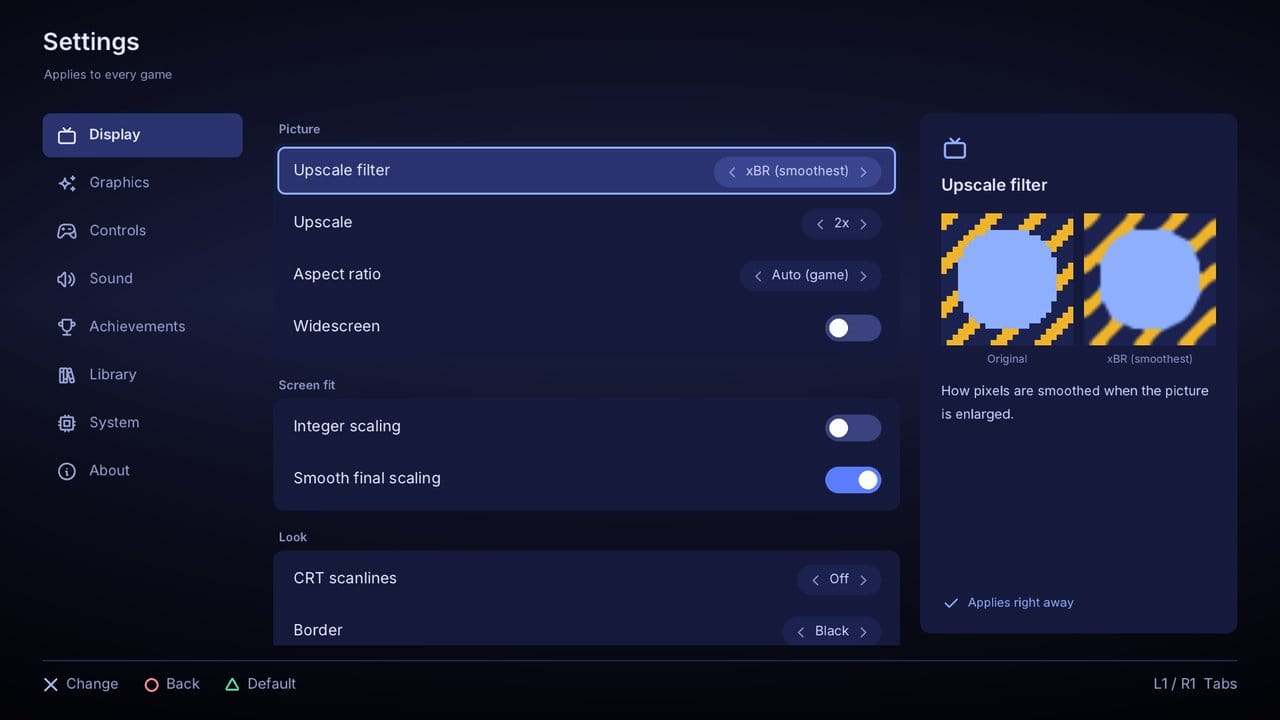
Furthermore, because SwanStation is open source, its internal memory architecture, savestate formats, and core options (over 104 distinct toggles covering CPU overclocking, PGXP perspective correction, widescreen hacks, and texture filtering) remain auditable, adaptable, and free from unilateral lock-in.
SwanStationPS5 1.0.0: Bringing PS1 Mastery to Modern Silicon
The ultimate vindication of open-source emulation is portability. While a closed-source binary is handcuffed to whatever platforms its author personally compiles for, open-source code can be ported to unexpected, exhilarating new frontiers by anyone with the skill and ambition to build it.
Case in point: SwanStationPS5 1.0.0, released today by developer darkxex.
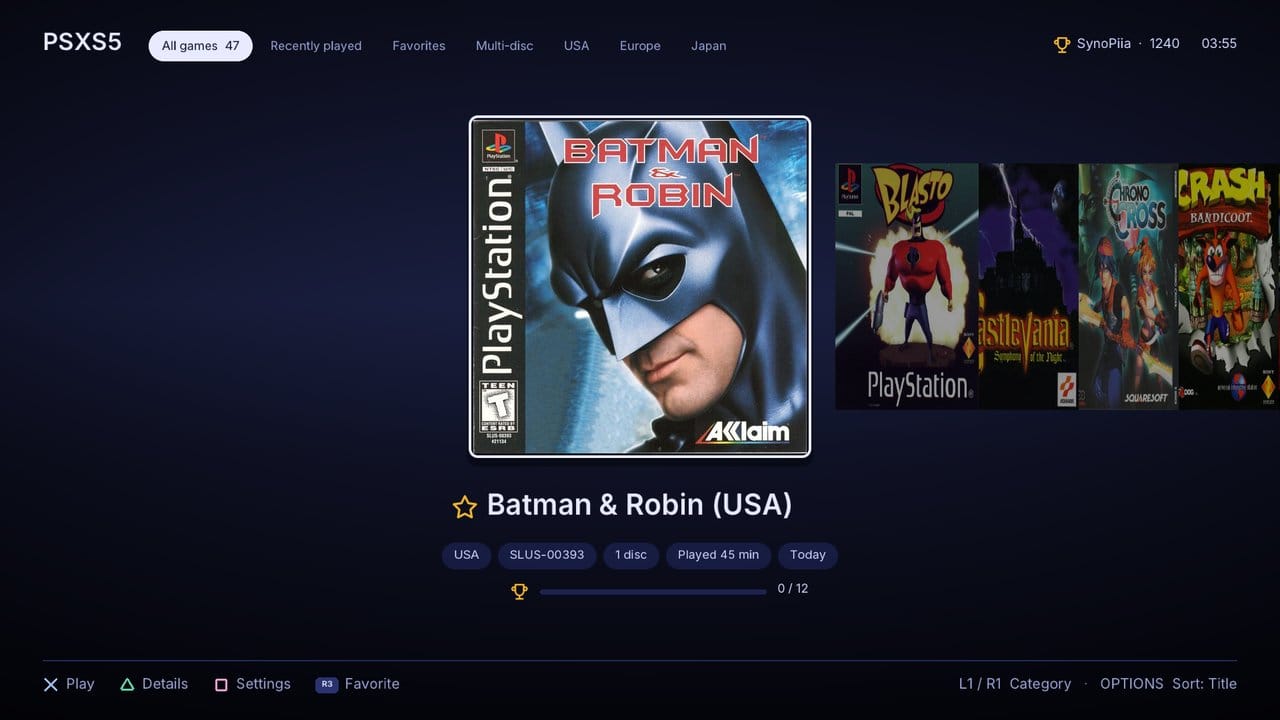
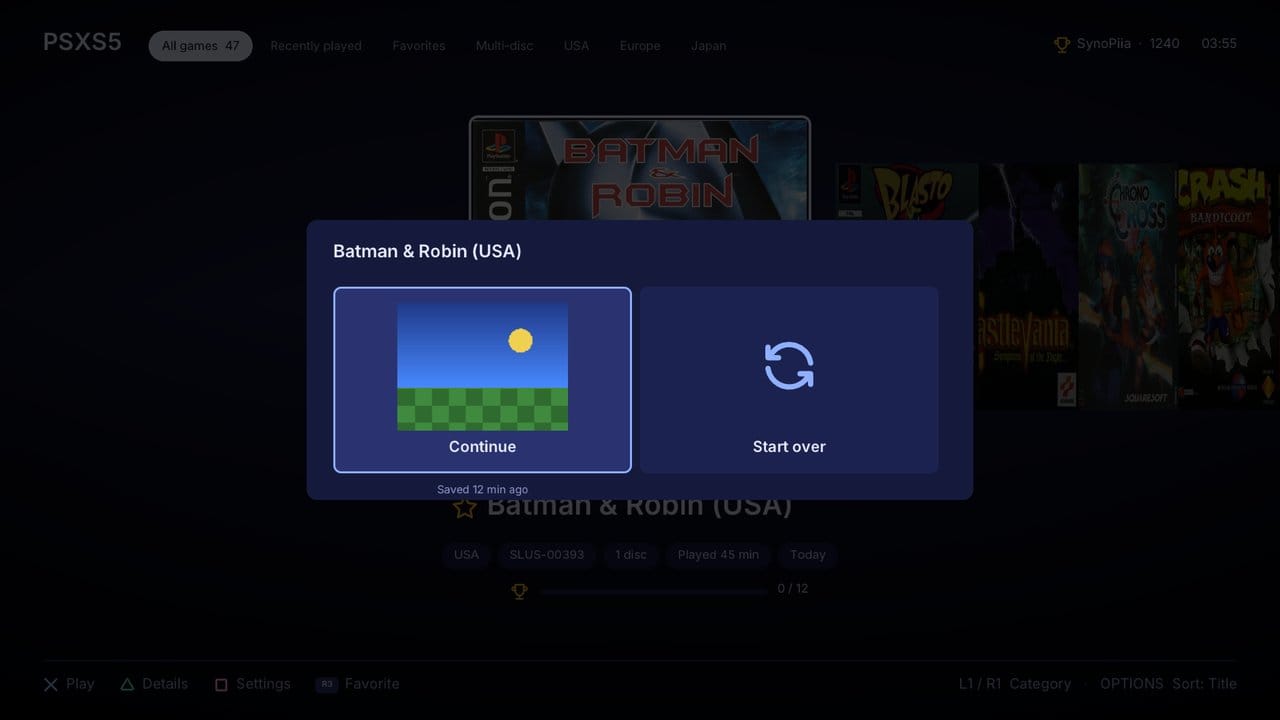
SwanStationPS5 takes the frontend polish of SynoPiia's PSXS5—the dynamic cover-flow shelf, in-game quick menus, custom themes, and cheat database—and strips away legacy cores to run entirely on a freshly compiled SwanStation engine. The technical capabilities running directly on PS5 hardware are staggering:
- Up to 16x Resolution on RDNA 2 GPU: SwanStation draws directly through Vulkan on the PS5's AMD GPU, scaling PlayStation 1 games from 240p up to pristine 4K+ resolutions without breaking a sweat.
- Full PGXP Polygon Stabilization: Complete sub-pixel geometric precision eliminates the warping textures and dancing vertices that defined 90s rasterization, turning titles like Ridge Racer Type 4, Silent Hill, and Metal Gear Solid into modern visual spectacles.
- DualSense Light Gun Emulation: In what might be one of the coolest console homebrew features in years, SwanStationPS5 utilizes the DualSense controller's built-in gyroscopes and accelerometers to transform the pad into a functioning GunCon. You point the controller directly at your television screen to play Time Crisis or Point Blank, pulling R2 to fire.
- DualSense Adaptive Triggers: R2 delivers tactile trigger resistance mimicking real vehicle accelerator pedals in racing games like Gran Turismo.
- Built-In OpenBIOS Fallback: Operates out-of-the-box using clean-room OpenBIOS without requiring users to dump commercial firmware, while seamlessly supporting real
SCPH1001.BINdumps for bit-perfect accuracy. - In-Game Walkthroughs & Manuals: Players can open game manuals or plain-text strategy guides (
.txt) directly from the in-game pause overlay while playing.
The Lesson: Forkability Is Preservation
The story of DuckStation and SwanStation is not a tale of heroes and villains. Stenzek built one of the greatest pieces of reverse-engineering software in emulation history, and his contributions will echo for decades. But human creators get tired, frustrated, or change direction. Licenses change. Repositories get archived or made private.
That is precisely why the GPL exists. That is why Libretro maintains forks like SwanStation. Because true digital preservation cannot be held hostage by platform restrictions, closed binaries, or corporate app store sandboxes.
Whether it is getting your memory cards synced via Syncthing on an open handheld or shooting criminals in Time Crisis by aiming a DualSense at your TV in 16x 4K, SwanStation's return proves that open source always finds a way.
Check out SwanStationPS5 1.0.0 on GitHub and keep an eye on upstream commits over at libretro/swanstation.