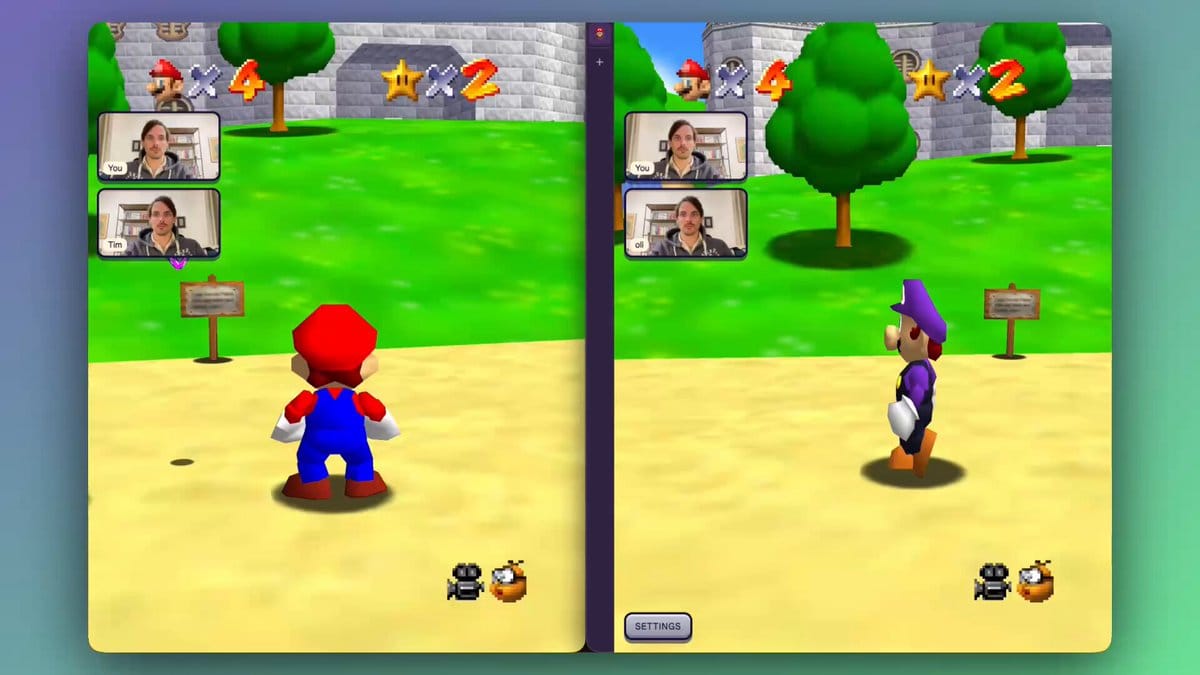

If you told someone in 1996 that thirty years later they would be jumping through Princess Peach's castle paintings with eleven friends, chatting over integrated live webcam feeds, and competing on global kill-death leaderboards—all running instantly inside a web browser tab without downloading a single file—they would have assumed you were hallucinating.
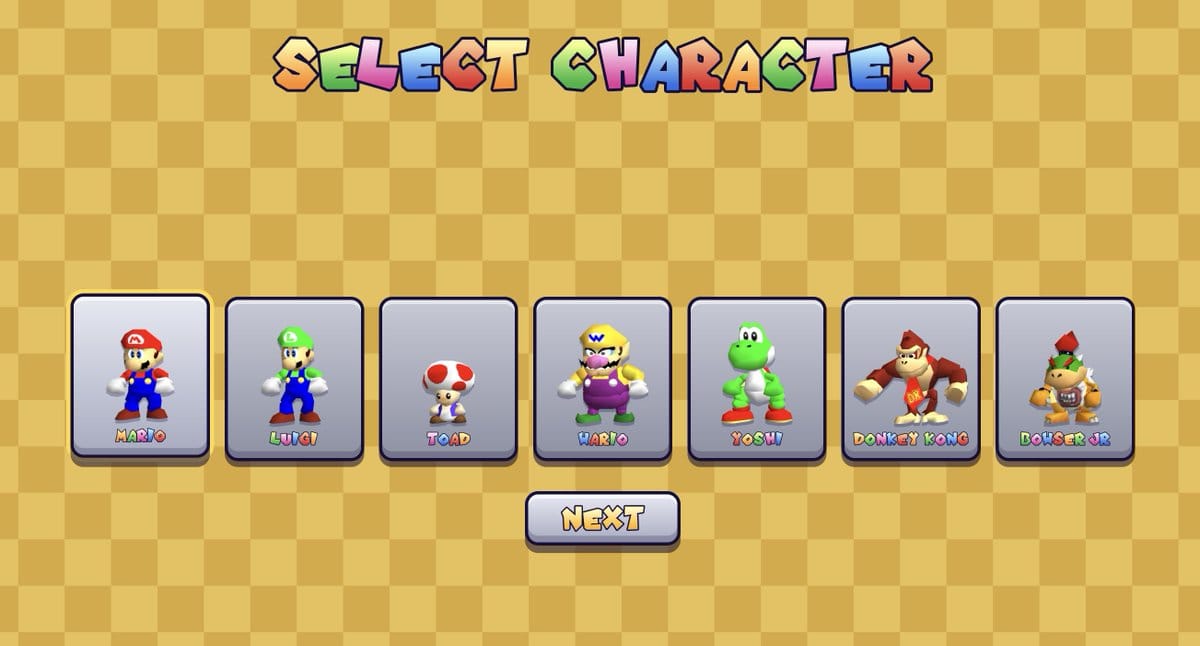
Yet that is precisely what developer Oliver Sauter (@olivers_tools) has unleashed on the internet. After his in-browser Super Mario 64 Multiplayer prototype went viral across social feeds, Sauter deployed a massive feature overhaul adding private matchmaking rooms, competitive leaderboards, full key customization, and a playable character roster including Bowser Jr., Donkey Kong, Yoshi, Luigi, Wario, and Toad.
I made Super Mario 64 Multiplayer, runs entirely in the browser.
— Oliver Sauter (@olivers_tools) October 8, 2026
After this has gone viral unexpectedly I made some important improvements! pic.x.com/QeYxkNk3TR
The Viral Chaos of Peach's Castle
Super Mario 64 has enjoyed one of the most prolific modding communities in gaming history, but multiplayer has historically required technical friction: downloading a patched PC port executable, coordinating Hamachi or port-forwarded IP addresses, matching mod version numbers, or configuring controller mappings inside standalone frontends.
Sauter eliminated all of that friction with a single URL. By compiling the game logic into a web-native application, players can open a link, enter a room, and immediately begin running around Peach's courtyard alongside up to 11 other players.
[LOBBY] MAX_CONCURRENT_PLAYERS: 12
[RUNTIME] WebAssembly (WASM) 60 FPS
[NETCODE] WebRTC Low-Latency State Synchronization
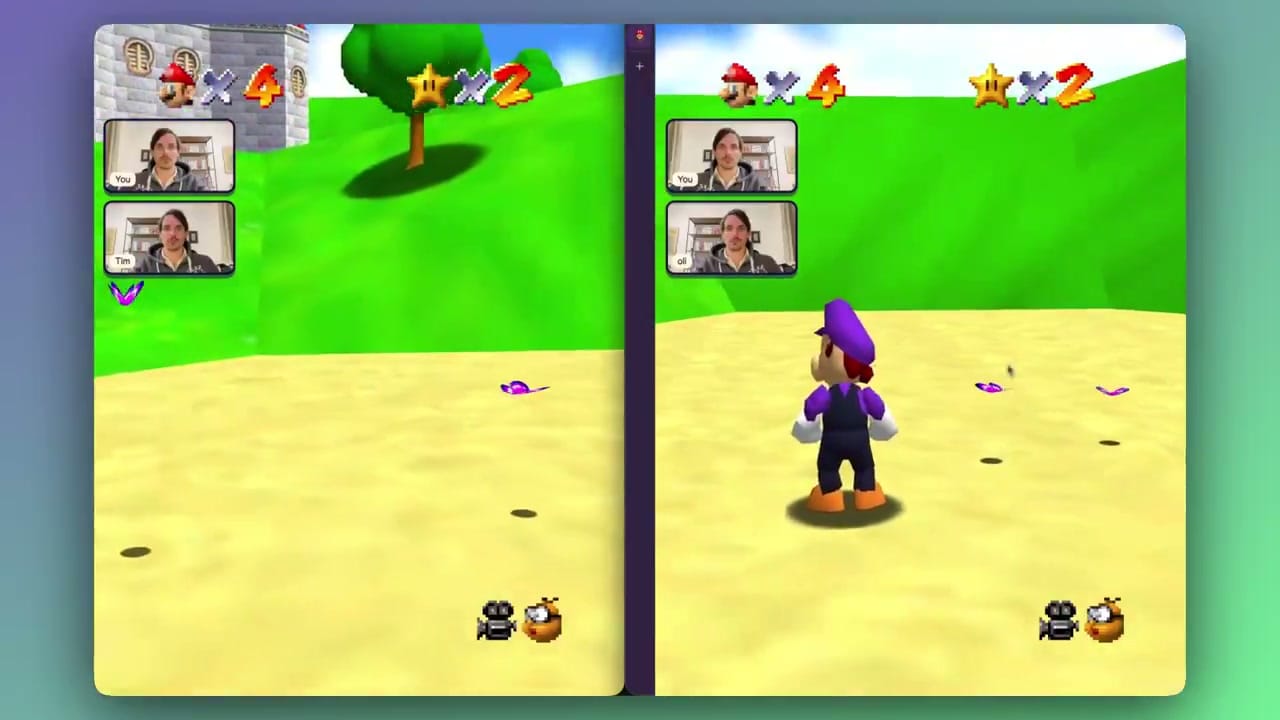
[COMMS] Integrated Peer-to-Peer Live Video/Audio Chat
[MAP_MODES] Full Unlock Sandbox OR Fresh Star Campaign
[LEADERBOARD] Real-Time Sync: Stars // Coins // Kills // Deaths
The latest update transforms what began as a fun casual playground into a genuinely chaotic party sandbox:
- Private Invite Rooms: Generate custom room codes to host private sessions with your friends instead of being thrust into public free-for-all lobbies.
- Competitive Leaderboards: Real-time on-screen tracking monitors who collects the most Power Stars, who hoards the highest coin counts, and who racks up the most PvP "kills" (by slide-kicking, dive-bombing, or ground-pounding other players into hazards).
- Expanded Character Roster: Beyond the standard red-hatted plumber, players can pick from Luigi, Wario, Toad, Yoshi, Donkey Kong, and Bowser Jr., each fully rendered with custom 3D models and voice clips.
- Map Progression Toggles: Choose whether the castle is completely unlocked from the start for unrestricted exploration, or start at zero stars and race to defeat Bowser together.
- Custom Keybinding: Full keyboard and gamepad remapping to fine-tune your triple jumps, wall-kicks, and long-jumps.
The Technical Foundation: Decompilation to WebAssembly & WebRTC
How does a 1996 Nintendo 64 game run so flawlessly inside a web browser with low-latency netcode and webcam streams? The answer lies in the heroic lineage of the Super Mario 64 Decompilation Project (sm64-decomp).
In 2019, reverse engineers achieved what was once considered impossible: they disassembled and reverse-engineered the compiled N64 MIPS machine code back into 100% human-readable, byte-matching C source code. That watershed moment freed Super Mario 64 from the confines of emulation plugins and proprietary hardware.
Once you have clean C code, modern compiler toolchains open up infinite possibilities:
- WebAssembly (WASM): Using Emscripten and LLVM, the C codebase is compiled directly into WASM bytecode. The browser executes this bytecode near native CPU speeds, allowing all of Mario's complex physics calculations, collision meshes, and camera logic to execute at 60 FPS without frame drops.
- WebGL Canvas: The original Fast3D microcode display lists are intercepted and translated directly into modern WebGL draw calls, rendering crisp widescreen polygonal geometry without emulation overhead.
- WebRTC Data Channels & Media Streams: Traditional game servers struggle with high-bandwidth real-time video chat. By utilizing WebRTC, player positions, velocity vectors, and input states are broadcast over lightweight UDP data channels, while video chat operates peer-to-peer. You literally see your friend's face in the corner of your screen as you throw them off the edge of Lethal Lava Land into molten magma.

The Web as the Ultimate Universal Console
Just hours ago, we reported on P.T. running natively on an M2 iPad and predicted that the open web would be the next frontier for reverse-engineered console games. Oliver Sauter’s viral SM64 multiplayer project proves that this transition is already happening at breakneck speed.
When game code is decoupled from proprietary platform silos, it stops being a locked museum piece and becomes an evolving, living medium. A single link in a Discord channel or Twitter DM can launch twelve people across different continents into a seamless 3D playground that first captivated the world thirty years ago.
No ROM patching. No emulator configuration menus. Just click, jump, and play.
RECOMP THE PLANET.