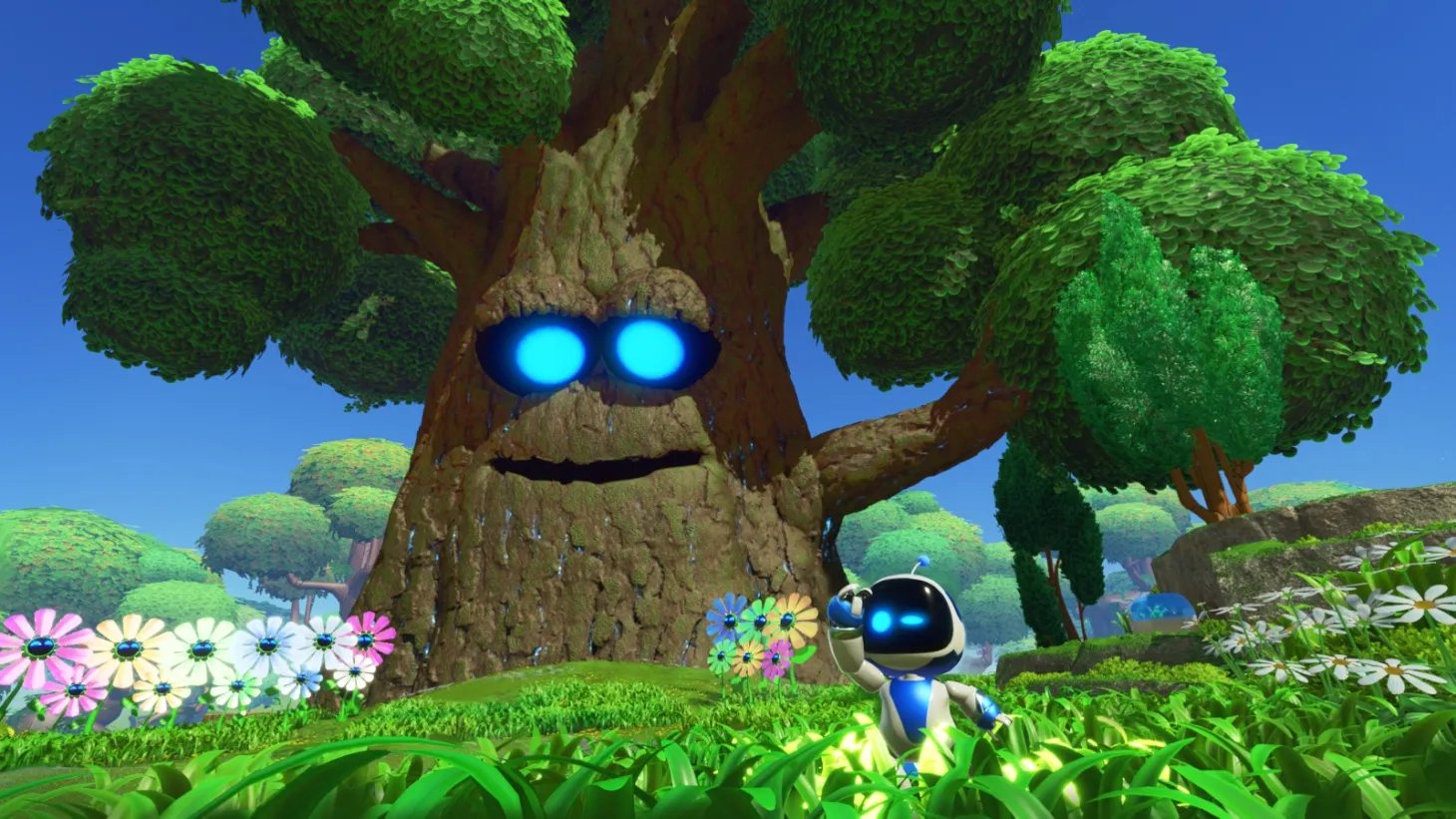

Just as the emulation world was processing the 97% GPU shader milestone from AnyPS5 and native Fox Engine builds of P.T. running on Apple Silicon, another shockwave has hit the PlayStation 5 scene. Sony's crowning technical showpiece—Team Asobi's critically acclaimed Astro Bot—has experienced a dramatic, game-changing performance leap on PC.
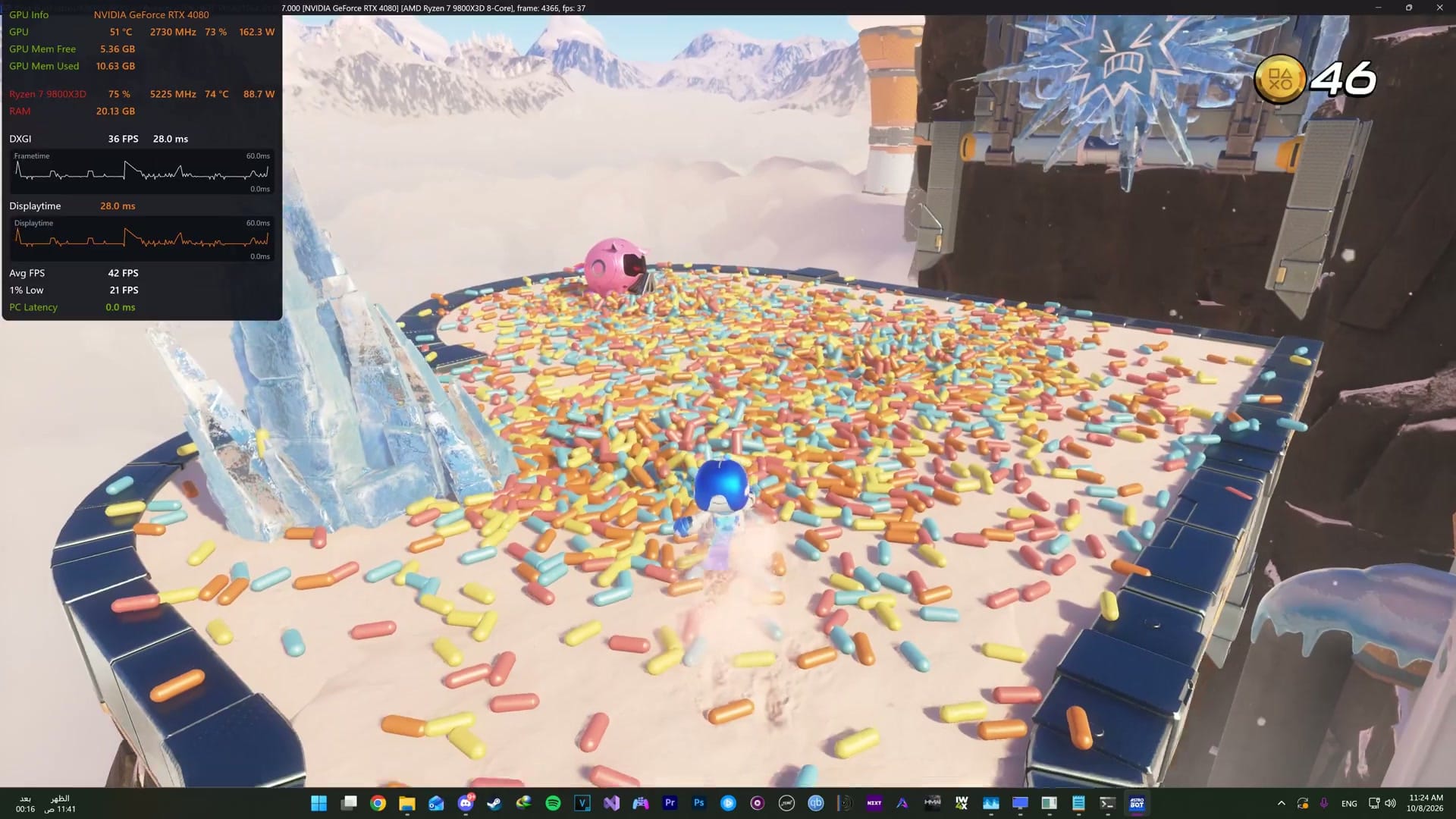
Hardware analyst and reverse-engineering watcher Musashi (武蔵) (@iExplosiveRage) published gameplay footage showcasing Astro Bot running on the latest build of the KytyPS5 emulator. The results are nothing short of astounding: running at a native 4K resolution with unlocked framerates targeting 144 Hz, the game soared from an unplayable ~7 FPS two weeks ago to a smooth ~50 FPS today—all with active Ray Tracing enabled and working PlayStation Trophies.
تحسن اداء استرو بوت بشكل كبييييييييييييييييررررر على محاكي KytyPS5 وبالاخص الفورك هذا : github.com/Jetsku/KytyPS5…
— Musashi | 武蔵 (@iExplosiveRage) October 8, 2026
اللعبة صارت تشتغل مع الـRT + شغلتها بدقة 4K مع فتح الفريمات الى 144، طبعا المرحلة هذي متطلبة للحين لكن قبل اسبوعين كنت اجيب فيها 7 فريم تقريبا والحين صارت تصك الـ50 pic.x.com/PfvqItJNLo
وايه صح المحاكي صار يدعم التروفيات 🎉
— Musashi | 武蔵 (@iExplosiveRage) October 8, 2026
The Translation: What Musashi's Dispatches Reveal
For non-Arabic speakers, Musashi's update provides critical context regarding how fast the ninth-gen emulation frontier is advancing:
[REPORT_01] "Performance of Astro Bot has improved MASSIVELY on the KytyPS5 emulator,
             specifically on this fork: github.com/Jetsku/KytyPS5/releases/tag/u59-windows-20261007-int17-pre
             The game now runs with Ray Tracing (RT) + I ran it at 4K resolution with unlocked frames
             up to 144 Hz. Of course this level is still demanding, but two weeks ago I was getting
             around ~7 FPS here, and now it hits ~50 FPS!"

[REPORT_02] "Oh yeah, and the emulator now supports Trophies 🎉"
A leap from 7 FPS to 50 FPS represents an over 700% speedup in a single fortnight. Even more impressive is that this is not a lightweight 2D title; Astro Bot is one of the most mechanically and visually complex games in the modern PlayStation catalogue, making extensive use of physics simulations, volumetric particle effects, and dense GPU compute buffers.
The Secret Weapon: Jetsku's Software Ray Tracing Engine
To understand why this breakthrough happened, you have to look into the work of developer Jetsku, whose active fork of KytyPS5 (specifically release u59-windows-20261007-int17-pre) has become the vanguard for PS5 compatibility.
Previously, booting Astro Bot required community game patches to manually strip out ray tracing instructions ("Disable GI probes and lighting shaders"). Without those patches, the character models would render pitch black and the entire scene would collapse into darkness because the emulator's Vulkan translation layer would encounter unsupported hardware ray-tracing instructions and bail out.
Jetsku solved this by architecting a dedicated Software Ray Tracing Engine (KYTY_RT_SOFTWARE):
- Universal RT Compute: Rather than relying solely on vendor-specific hardware RT extensions that cause device-lost crashes across different GPU architectures, KytyPS5 can now execute PS5 ray-tracing node traversals and intersection tests inside custom Vulkan compute shaders across NVIDIA, AMD, and Intel GPUs.
- No More Dark Robots: Tiled deferred lighting, global illumination (GI) probes, and ray-traced contact shadows now run natively in-engine. The two mandatory "non-RT patches" have been officially retired.
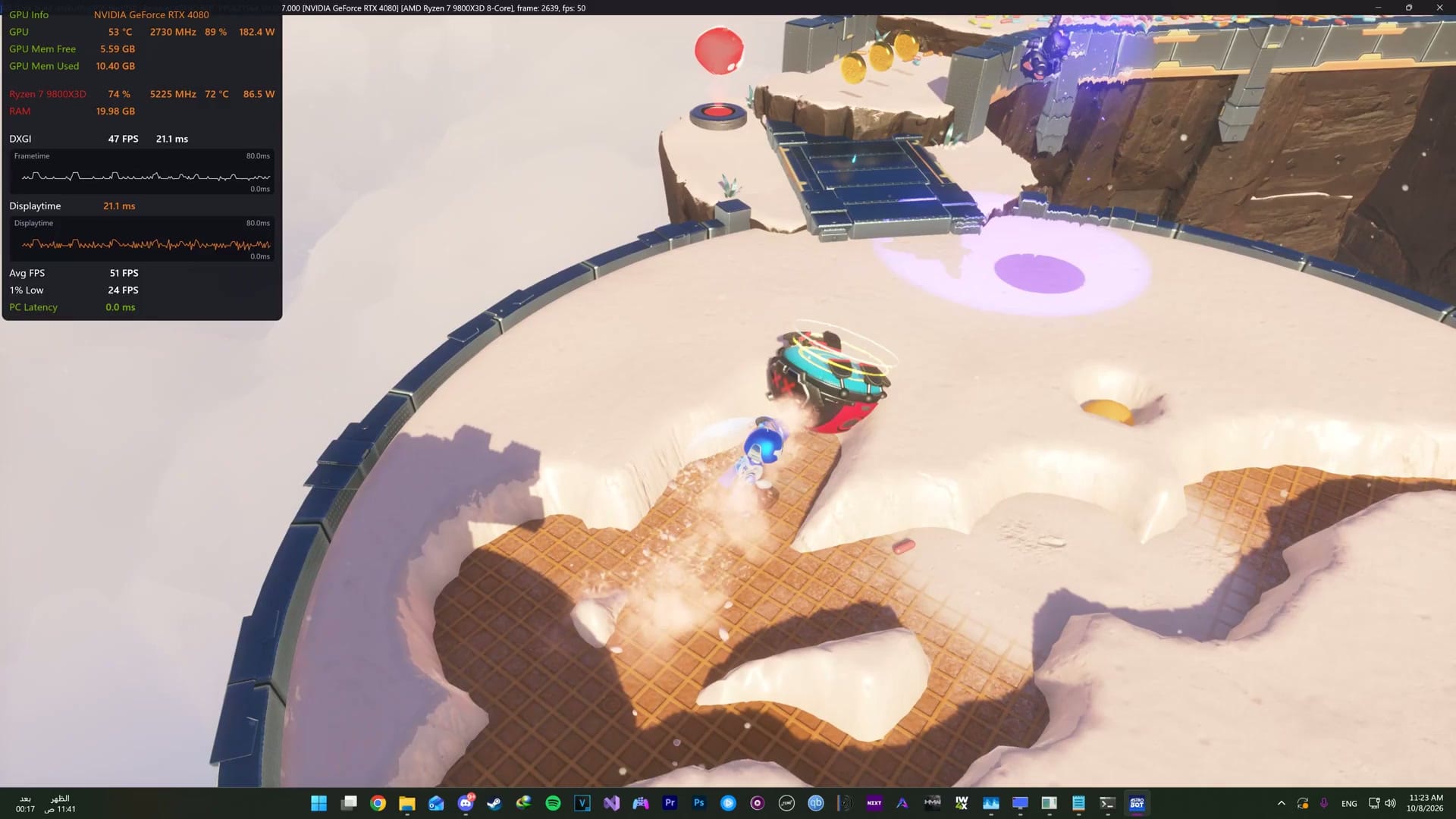
- Negligible Overhead: In Jetsku's internal benchmarks on an RTX 3090 / Ryzen 9 7950X3D testbed, running the full software ray-tracing lighting pipeline cost less than 3% of the total frame budget in demanding stages like Sky Garden (33.6 FPS vs 34.8 FPS patched).
- Async Pipeline Compilation: Shaders and ray tracing pipelines are compiled asynchronously in background worker threads (
KYTY_RT_PIPELINE_ASYNC), eliminating the catastrophic stuttering that plagues early emulator builds.
Beyond Graphics: Occlusion, Meshes, and Native Trophies
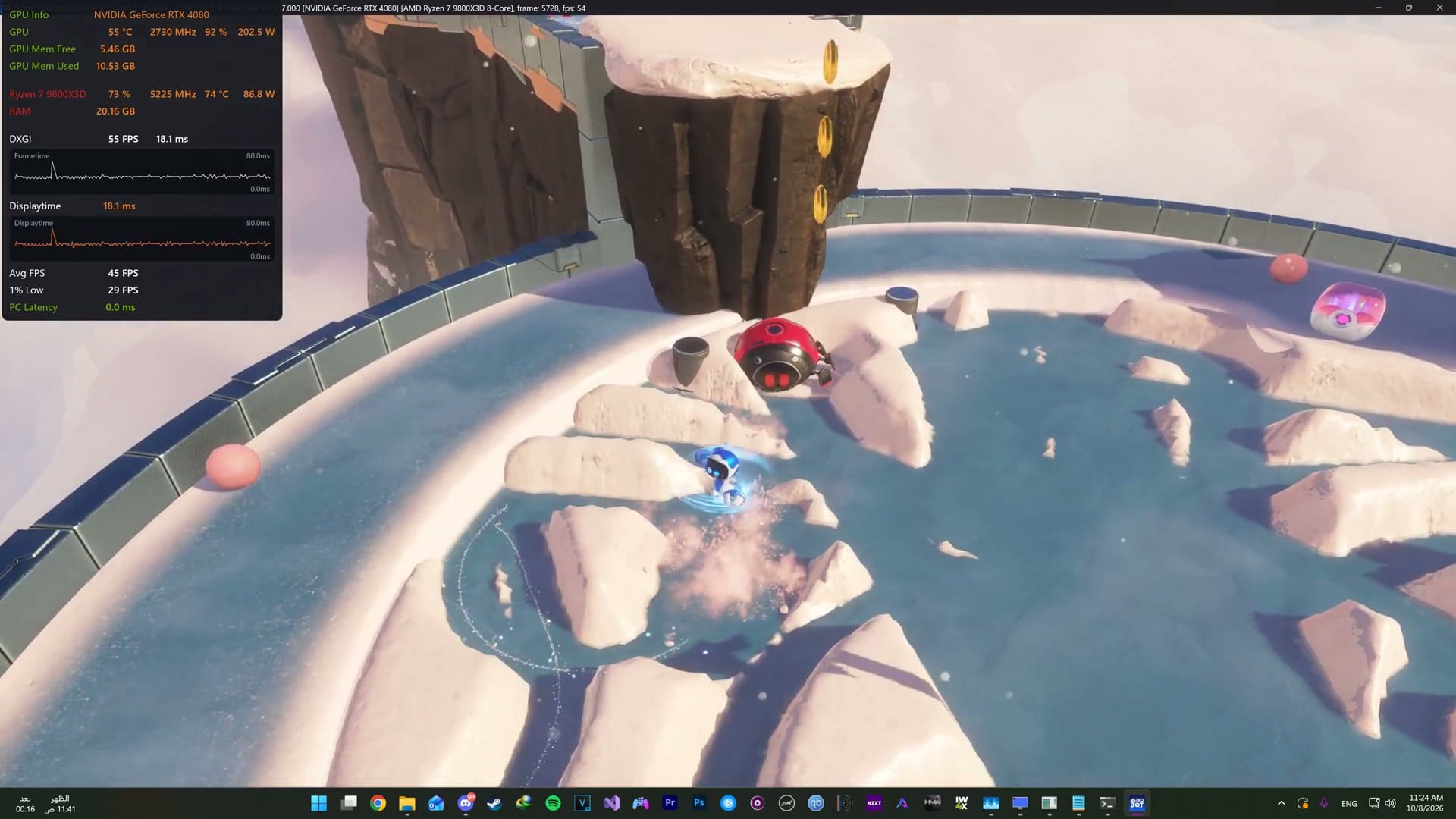
The performance explosion seen in Musashi's footage is not just down to shader translation; Jetsku reworked several fundamental GPU bottlenecks in release U59:
- Performance-Mode Occlusion Queries (
KYTY_GPU_OCCLUSION=0): Traditional GPU occlusion queries require round-trips to the CPU to determine which objects are hidden behind walls. Kyty's performance mode returns synthetic "visible" responses, preventing queries from breaking draw-call batches and boosting draw efficiency by upwards of 15-20%. - GPU-Native Indirect Mesh Draws (
KYTY_NATIVE_INDIRECT_MESH): Complex environmental geometry and instanced debris meshes are now constructed directly in GPU VRAM without waiting for CPU timeline readbacks. - Read-Only Buffer Acceleration (
KYTY_READONLY_BUFFERS): Storage buffers that the PS5 guest shaders only read from are strictly flagged as read-only, drastically improving memory throughput on modern AMD RDNA GPUs. - Working PlayStation Trophies: As Musashi gleefully pointed out, KytyPS5 now hooks the PS5 OS trophy notification subsystem. Earning in-game milestones, collecting hidden bots, and clearing levels triggers legitimate Trophy popups, bringing the console experience one step closer to full parity on PC.
The Ninth-Gen Timeline Has Collapsed
When the PlayStation 5 launched in late 2020, conventional wisdom among retro enthusiasts and tech commentators was that ninth-generation emulation would remain a distant dream for at least a decade. The memory architectures were deemed too unified, the custom I/O SSD controllers too complex, and the ray tracing pipelines too proprietary.
Four years later, that narrative has been utterly dismantled. Between AnyPS5 rewriting binaries for zero-overhead PC execution, buberlo porting console games to Apple Silicon, and Jetsku's KytyPS5 running *Astro Bot* at 4K with ray tracing and working trophies, the timeline has collapsed.
Open-source reverse engineering is moving faster than proprietary hardware cycles. The future of gaming preservation is being written right before our eyes.
RECOMP THE PLANET.