

The triple-A slush fund is finally running dry. BioWare, once the defining studio of the western RPG, spent two decades shooting itself in the foot in front of an audience that kept hoping it would stop. It catered to a fraction of a fraction of its own market and answered with flop after flop, beginning with Anthem. Now it joins the ranks of former titans: Bungie, Blizzard, and BioWare. Bethesda may be next, because Bethesda has spent years perfecting the art of shipping less and charging more.
On October 21, 2026, the studio posted a black card on X. There was no trailer, no farewell livestream, no final patch notes. Just a logo, a list of the games it once made, and a paragraph confirming that BioWare is closing and that early development on the next Mass Effect has ended. Thirty years of RPG history, terminated in a Notes app screenshot.

Awful News for the Woke:
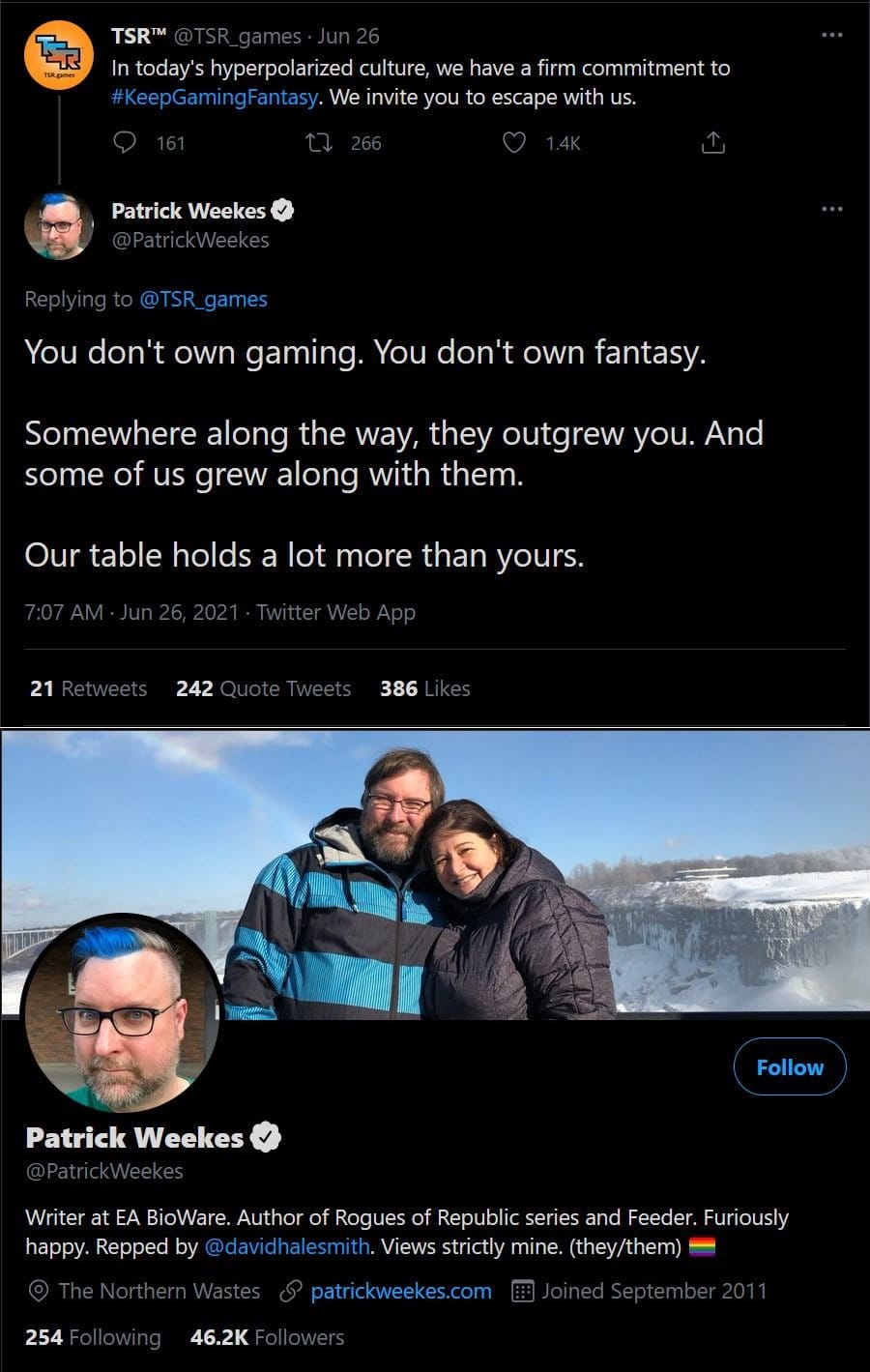
Unlike this they/them Bioware writer claimed back in 2021,
Gaming has NOT outgrown Gamers.
We still own gaming.
And You HAVE TO cater to us.
Or you will get shut down.
Simple as that.
Thirty Years, Then a Black Screen
BioWare was founded in Edmonton in 1995 by three physicians, Ray Muzyka, Greg Zeschuk, and Augustine Yip, who loved tabletop campaigns more than they loved the software business. That enthusiasm became a run of games few studios have matched. Baldur's Gate proved in 1998 that a dense, text-heavy RPG could still sell. Neverwinter Nights turned its toolkit into a community. Knights of the Old Republic wrote better Star Wars than the films that inspired it. Jade Empire, Mass Effect, and Dragon Age followed, three original universes built in five years by a studio that seemed incapable of missing.
EA bought BioWare and Pandemic in 2007 for $860 million. For a while the acquisition looked benign: Mass Effect 2 and Dragon Age: Origins remain the last clean wins of the studio's life. Then the schedule took over. Dragon Age II was forced out in roughly fourteen months with one city and recycled caves. Mass Effect 3 turned its ending into a permanent argument in 2012, and Muzyka and Zeschuk left the same year. The founders were gone, and the parent company owned the calendar.
What followed was a decade of triage. Inquisition spent years fighting Frostbite's missing RPG tooling and still won Game of the Year in 2014, a testament to the people rather than the process. Andromeda was delegated to a satellite studio and shipped broken in 2017. Anthem consumed roughly seven years and emerged as a flying game with no reason to land. Anthem Next was cancelled in 2021. The Veilguard arrived in 2024 after three reboots and a decade of stop-start production, and the layoffs came anyway.
The postmortems never varied: the engine was wrong, the scope was wrong, leadership kept changing, the team was burning out, and executives invoked "BioWare magic" as though a phrase could substitute for a production plan.

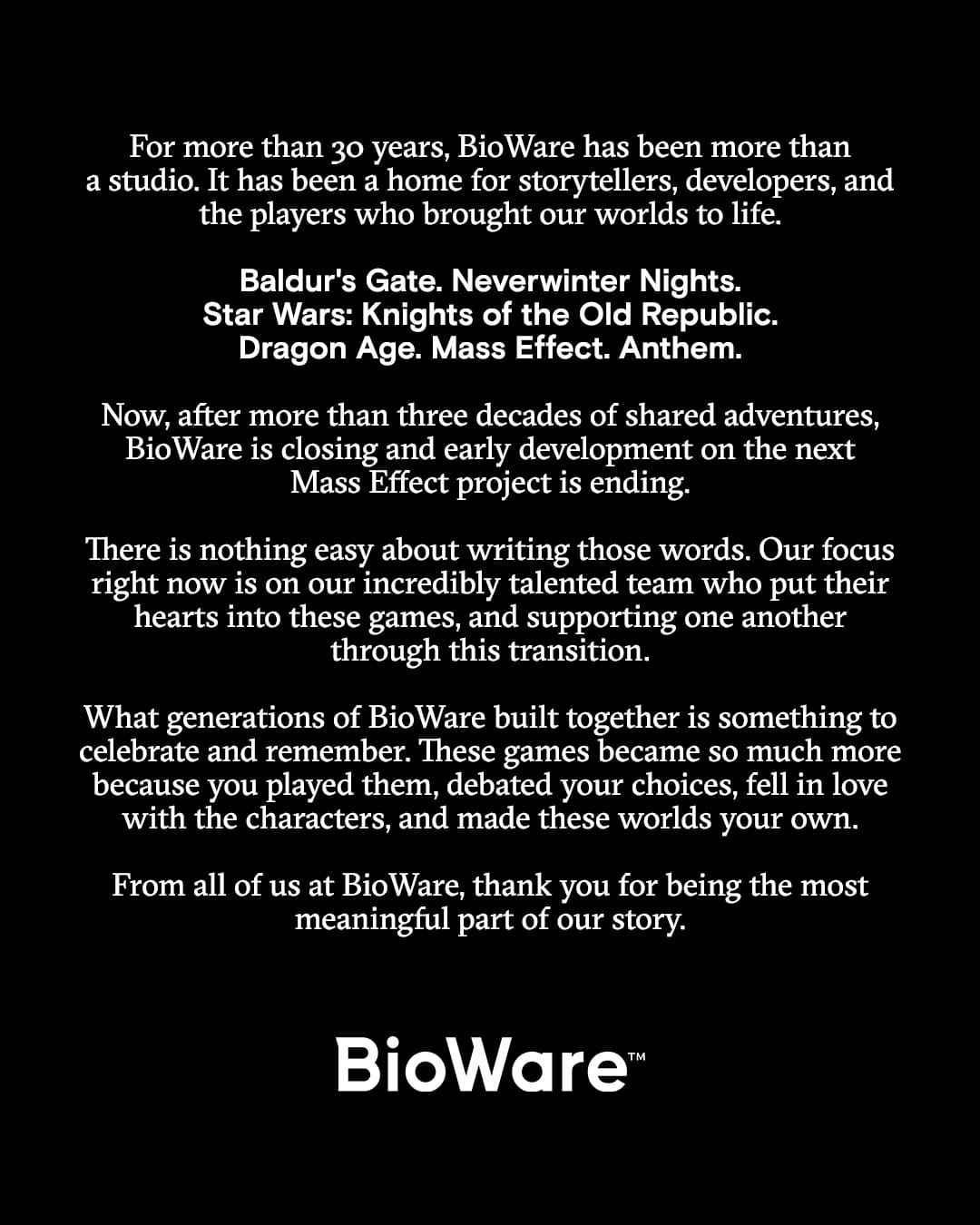
The statement thanks the players. It says nothing about the cancelled projects, the layoffs, or the years the next Mass Effect spent in pre-production before someone pulled the plug. It does not need to. The statement is the scoreboard.
The replies wrote themselves.

The Live-Service Trap
Anthem is the hinge. EA looked at Destiny and ordered a forever game. The flying worked, the world looked expensive, and everything around it felt like a spreadsheet: loot with nothing worth chasing, an endgame that did not exist, a story that ended at the tutorial, and a roadmap that was quietly erased. When Anthem Next was cancelled, the lesson drawn was not "make better games." It was "the market is difficult."
Frostbite compounded the problem. The engine was designed for Battlefield: destruction, vehicles, ballistics, scale. It had no native answer to dialogue trees, companion logic, or the save-state complexity an RPG demands. EA mandated it anyway, so BioWare spent years building the tooling that other engines ship on day one. Inquisition, Andromeda, and Anthem all paid that tax. The relevant question inside the company was never "is the game good?" It was "is the engine cheap?"
None of this is a story about a single bad game. It is a story about a business model that treated games as perpetual revenue streams and audiences as an obstacle to be managed.
That is the slush fund in miniature: cheap capital, mandatory growth, and a board that wanted a perpetual revenue machine. Buy the studio, promise the live service, ship the minimum viable product, cut the roadmap when the numbers miss. The studio takes the blame, the brand takes the write-down, and the executives take the next job.
Bethesda Is Next
Starfield was supposed to be Bethesda's monument. It arrived in September 2023 after eight years of development, with a thousand planets and a main quest that played like a guided tour of better Bethesda games. The procedural generation produced terrain, not stories. Shattered Space changed no one's mind. Even the modders moved on, which is telling: the New Vegas and Skyrim modding scenes are as healthy as they have ever been in 2026, and they chose to stay there.
What does Bethesda do instead? It re-releases Skyrim and Fallout 4, and it keeps Fallout 76 on life support. Skyrim has now been ported to every platform short of a smart refrigerator. Fallout 76 launched in 2018 as a buggy, microtransaction-heavy, always-online mess, then survived on the television adaptation, seasonal content, and a store that never stops rotating. It is a live-service game, and it is the real golden goose: a recurring revenue stream that lets the company rest on its laurels while saying nothing whatsoever about The Elder Scrolls 6, a game announced so long ago that you could convince a younger colleague it was an E3 bit.
It was announced at E3 in 2018 with a thirty-second teaser of a mountain. Eight years later, the mountain remains the most substantial thing Bethesda has shown. Microsoft paid $7.5 billion for ZeniMax in 2021, cut 1,900 jobs across Microsoft Gaming in 2024, and closed Arkane Austin and Tango Gameworks. If the same arithmetic reaches Bethesda, the black card is already sitting in a template folder in Redmond.
The Word You Are Not Supposed to Use
I have never liked the word "woke." It is imprecise, it flattens several different phenomena into one insult, and it lets the people who deserve the criticism hide behind a culture-war label. But the thing it points at is real: a pseudo-communist managerial class, raised inside the most capitalist entertainment industry on earth, spent roughly two decades working its way into triple-A development and produced almost nothing of value.
Two decades is not an accident. It is a hiring pipeline, a consultancy ecosystem, and a generation of design documents written for an audience that was never going to buy the game. The people in charge told their customers they were on the wrong side of history, then discovered that the audience they had been taught to ignore was the only one still paying full price at launch.
Mass Effect and Dragon Age were loved because they were specific. They had writers with opinions, worlds with texture, and characters who could be wrong. The moment the guiding principle became "do not offend anyone who matters," the stories stopped mattering to anyone at all. None of this justifies harassing individual developers, most of whom had no authority over the decisions that sank the studio. It does justify an honest accounting: five flops, a cancelled roadmap, and a closing notice.

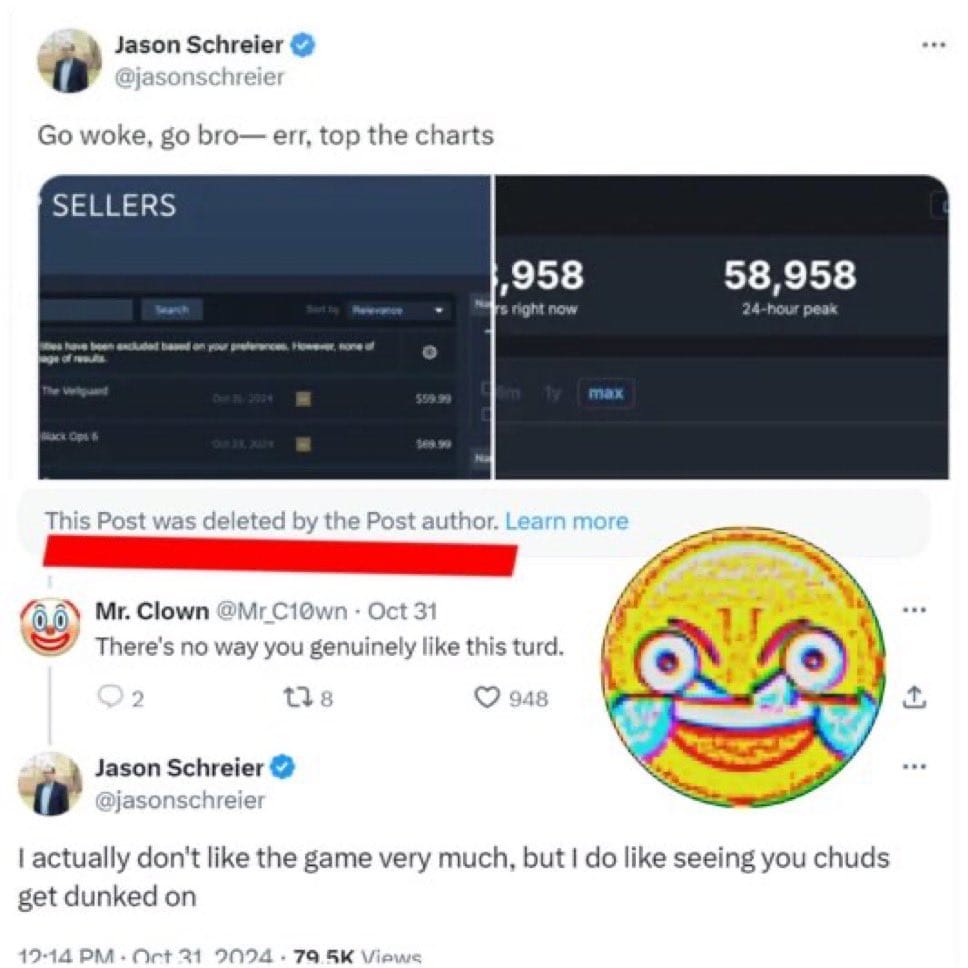
I hope that adding that shit and owning the chuds was worth it, BioWare.
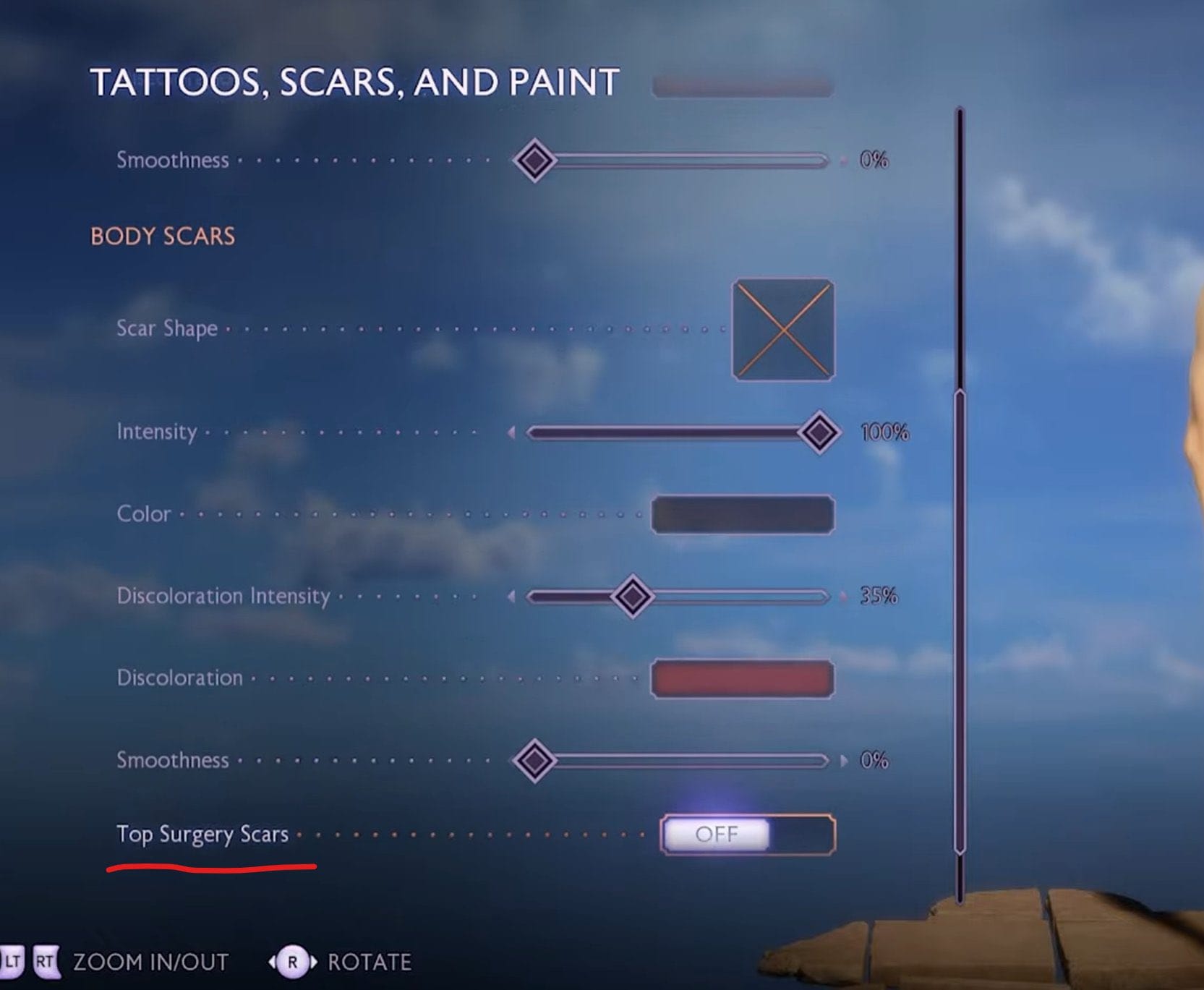
One of the best studios with a legendary franchise ruined for adding that non-binary shit and options for the modern audience, leaving out a trash game that no one liked, not even journalists.
Hope the
 |  |
The Money Men Did It Too
The reply guys have a point, and it is the strongest part of their case. Private equity did not need a culture war to ruin BioWare. It had a spreadsheet. EA's $55 billion take-private is the largest leveraged buyout in video game history, and the structure matters: in an LBO, the debt lands on the company being acquired. Every studio becomes a line item, every line item gets a target, and every missed target ends in a sale, a merger, or a closure.
That is what the "it was only wokeness" crowd refuses to see. A holding company that buys a studio for its intellectual property will gut it regardless of who the protagonist is. Capital is indifferent to the message. It cares about the margin, and the message was one of the ways the margin was chased, not the reason the chase began.

Can we get an update?
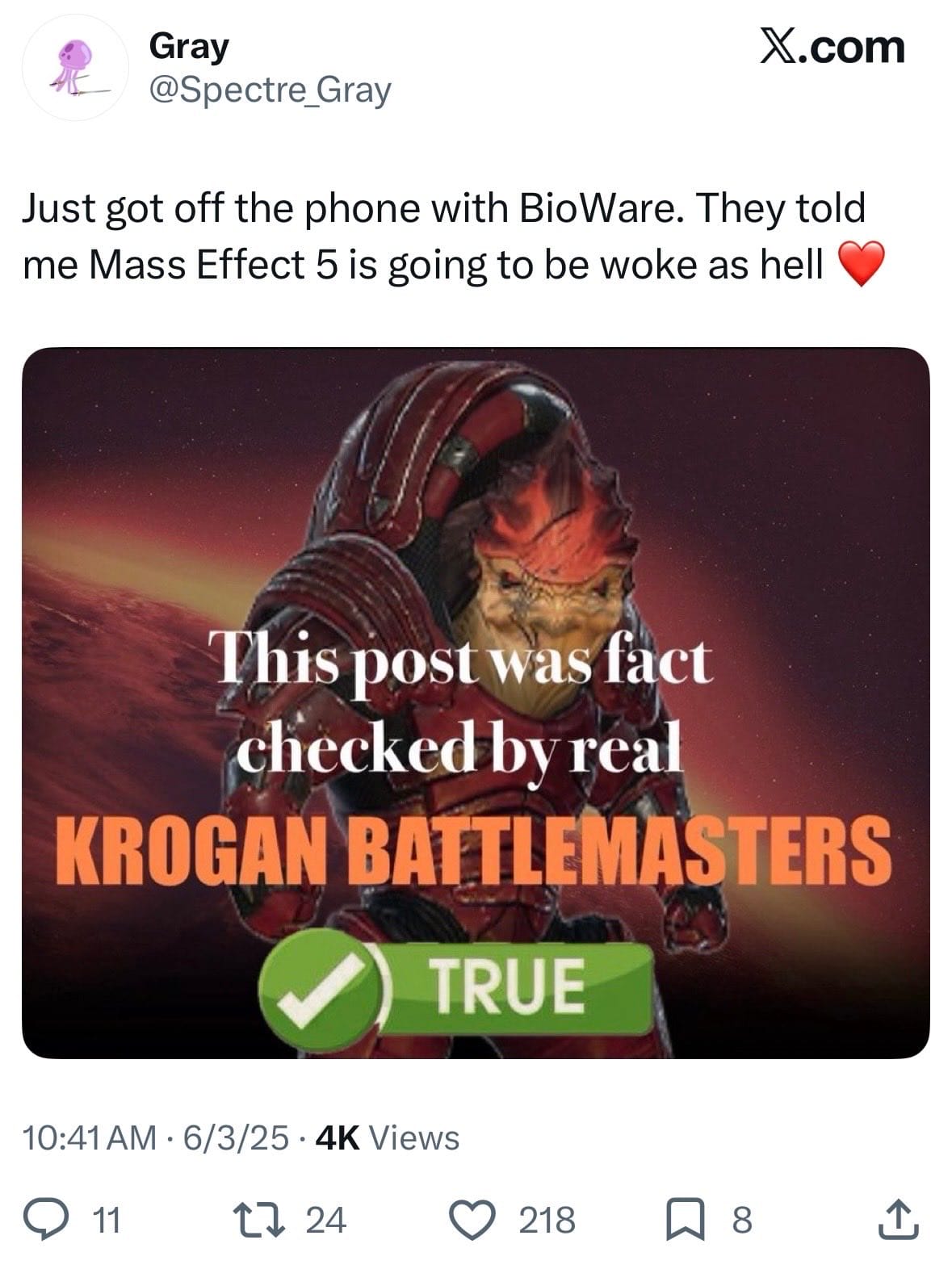
Both things are true. Capital built the chute; the culture pushed the product down it. The useful conclusion is not "wokeness ruined everything" or "private equity ruined everything." It is that a system optimized for growth over craft will eventually produce neither growth nor craft.
New Management, Same Machine
New management is now in place, and there is little reason to expect improvement from Asha Sharma, the new chief executive of a conglomerate whose model is to buy studios and discard them once the quarterly returns disappoint. A holding company does not care about Edmonton. It cares about the balance sheet, the release slate, and the next quarter. The playbook is immutable: acquire, integrate, cut, license the back catalog, repeat.
Sony offers no better hope. It remains an anti-consumer, faceless mega-corporation with no meaningful communication to the PlayStation faithful who function, in practice, as a congregation in everything but name. The live-service strategy that was supposed to yield a dozen perpetual games produced Concord, a hero shooter withdrawn two weeks after launch, and a stack of cancelled projects that never received public names. The console became more expensive. The subscription became more expensive. The communication became worse. The fans kept showing up anyway, because that is what a congregation does.
The Ledger
| Year | What the old guard did |
|---|---|
| 2007 | EA buys BioWare and Pandemic for $860 million. |
| 2012 | Muzyka and Zeschuk leave. Mass Effect 3 turns the ending into a permanent argument. |
| 2017 | Andromeda ships, BioWare Montreal is folded into Motive. |
| 2019 | Anthem ships. The roadmap does not survive the year. |
| 2021 | Anthem Next is cancelled. Microsoft closes the $7.5 billion ZeniMax deal. |
| 2022 | Sony buys Bungie for $3.6 billion. |
| 2023 | Starfield ships. Microsoft closes the $68.7 billion Activision Blizzard deal. |
| 2024 | The Veilguard ships. Concord dies in two weeks. Microsoft cuts 1,900 jobs. |
| 2025 | EA agrees to a $55 billion take-private, the largest leveraged buyout in gaming history. |
| 2026 | BioWare closes. The next Mass Effect is cancelled. Bethesda announces nothing. |
This Is a Wake, Not a Victory
Do not celebrate this. It is a wake, not a victory. The thing worth anticipating is the individual developer working from a bedroom, the same kind of person who filled the void in the 1980s after Atari, the triple-A publisher of its day, crashed the market so thoroughly that video games were written off as a fad.
Recall how bad it became. Atari staked the company on E.T. and Pac-Man, manufactured more cartridges than there were consoles, and watched the market fold. Warner Communications absorbed a $536 million loss in 1983. The American console business shrank from roughly $3.2 billion to about $100 million by 1985. Atari buried unsold cartridges in a New Mexico landfill, a story so absurd that people treated it as folklore until the excavation crew arrived in 2014. The press declared video games a passing fad. The shelves were full of licensed garbage. The gatekeepers had no plan.
What filled the void was not another conglomerate. It was the bedroom programmer with a Commodore 64, a ZX Spectrum, or a borrowed PC. It was shareware, bulletin-board distribution, and demo discs. It was id Software building Doom in a rented office and giving away the first episode. It was players constructing their own WADs and total conversions. The industry recovered because the tools became cheap enough for individuals to prove the gatekeepers wrong.
We are in that position again, except the tools are almost unreasonable. A single developer can download Godot for nothing, model in Blender, paint in Aseprite, score in FMOD, and publish on Steam for a $100 Direct fee. They can learn from a decade of GDC talks and devlogs, build an audience on Discord, and use a language model as a pair programmer for the boilerplate that once consumed six months. They can study decompilation and static recompilation and run the classics natively on hardware the original teams never imagined. The constraint is no longer permission, headcount, or a publisher's approval. It is scope, taste, and the discipline to finish.
Here is the practical version of that sermon. Build the smallest game you actually want to play. Ship a vertical slice in months, not years. Choose a genre where one person can compete: horror, roguelike, puzzle, retro shooter, or a story-driven RPG with one great town instead of ten empty planets. Build in public so the audience exists before the store page does. Own your community through an email list or a Discord instead of renting it from an algorithm. Do not build a live service unless you can afford a decade of servers. And for the love of the medium, put a beginning, a middle, and an end in the box.
None of this requires a slush fund. None of it requires a board of directors to approve the tone of a joke. None of it requires a live-service roadmap or a virtual currency. It requires a person with a computer and a reason to make something.
YOU are the developer now, and you have access to tools that genuinely touch the edge of a singularity. That was not possible before this decade. The old guard will fall. Be there to pick up the pieces and build the scene you want.
The black card is not the end of games. It is the end of their permission slip.