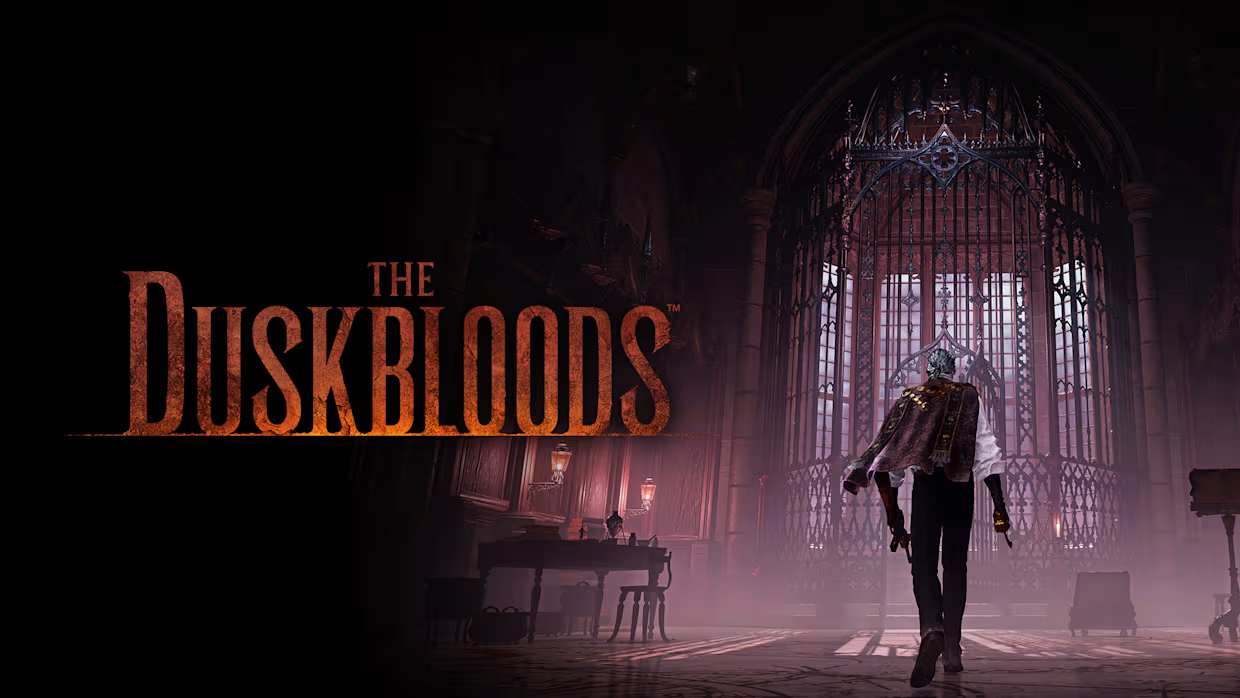

Closed network tests are designed to vanish. For publishers, they serve as disposable server stress runs, data gathering sessions, and early balance probes. For game preservationists, they represent an all-too-familiar casualty: the moment official authentication servers shut down, the client binary turns into an unresponsive brick that hangs on a failed TLS handshake or an expired session token.
When FromSoftware rolled out the Closed Network Test for The Duskbloods, their upcoming multiplayer-focused action RPG for the Nintendo Switch 2, players caught an early glimpse of the studio's dark fantasy world and tactical combat. When the test window concluded, the client became unplayable through standard channels. Developer sikoGD has changed that with the release of playDB-CNT, an open source launcher and diagnostic loopback server suite that allows legitimate dumps of the network test to run offline on experimental Switch 2 emulators.
The Trap of Ephemeral Network Builds
Booting a modern online network test offline is never as simple as clicking "Run" in an emulator. FromSoftware's client relies on a layered online stack: it must first establish an identity and handshake through Nintendo's modern NPLN networking architecture, pass security checks, negotiate cryptographic certificates, and then connect to FromSoftware's proprietary game infrastructure hosted at *.fromsoftware-game.net.
Without live remote endpoints answering those requests with valid signatures, session payloads, and matching region tables, the game engine refuses to initialize its main loop or present a single playable frame. Patching out every network check inside a decrypted executable is fragile, invasive, and prone to breaking engine state. playDB-CNT takes the cleaner reverse engineering path: rather than tearing apart the game binary, it stands up lightweight, local replacement services on loopback (127.0.0.1) and redirects the emulator's network traffic into them.
How the Stand-In Loopback Stack Works
The core of playDB-CNT is divided into two cooperative mock daemons that mimic the official server environment without sending a single packet over the public internet:
- Nintendo NPLN Service Stub (
tools/npln_server/): A local implementation of Nintendo's session and account service. It manages account state, handles login challenges, and provides an internal diagnostic dashboard to monitor incoming calls from the emulator. - FromSoftware Game Frontdoor (
tools/dusk_server/): A local TLS reverse proxy and JSON API responder that handles requests directed atfromsoftware-game.net. It implements session creation (ResponseCreateSessionParams), player identity signatures, and ping server discovery endpoints matched against schemas extracted from the game executable. - Automated Ephemeral PKI: Because modern game runtimes enforce TLS certificate verification, the suite includes an automated certificate generator (
make_pki.py). On first launch, it generates a local Certificate Authority (CA) and signs a domain-matched x509 leaf certificate for*.fromsoftware-game.net, injecting the generated CA directly into the emulator's trusted trust store. - BCAT Regulation Seeding: Network tests frequently rely on downloaded regulation data to define balance tables, item stats, and parameters. The launcher automatically provisions an isolated NAND layout, copying
regulation_nt.binfrom the game's RomFS directly into the appropriate BCAT save cache folder (system/save/bcat/0400D1D02399A000/Regulation/).
Targeting Eglantine, Lichii, and Eden
The launcher does not bundle an emulator. Instead, it bridges the game dump with the emerging generation of Switch 2 emulation projects, including Eglantine, Lichii, and experimental forks of Eden (such as eden-nx2). When you press Play, the launcher sets up a dedicated run environment with specific runtime flags:
env.update(
    EDEN_NX2_LOOPBACK_ONLY='1',
    EDEN_NX2_ONLINE_HOSTS='npln.srv.nintendo.net,npln.nintendo.net,fromsoftware-game.net',
    EDEN_NX2_ONLINE_SERVER='127.0.0.1:18443',
    EDEN_NX2_ONLINE_CA=str(pki / 'ca.der'),
    EDEN_NX2_EXPERIMENTAL_CODEC_DECODE='1',
    EDEN_NX2_APP_POOL_PROBE='1152'
)
These environment variables tell the emulator to confine its network layer to loopback, route Nintendo and FromSoftware hostnames directly to the local port, and trust the newly minted local CA certificate. It also isolates NAND data and user saves into a standalone duskbloods_test directory, leaving your regular emulator configurations and saves untouched.
Clean Room Preservation Discipline
The repository maintains strict preservation hygiene. No copyrighted assets, game dumps, encryption keys, or proprietary Nintendo SDK binaries are contained in the repository or release archives:
- Users must provide their own dumped game directory containing
base/exefs/main. The launcher validates the executable by checking its SHA-256 hash (2ef7b7bcd78905f30069d03aa44e1e124d83bd83bdcc1766bd3d01ea2ad137a3). - Users supply their own console keys (
prod.keysandtitle.keys), placed in the emulator's standard keys folder. - All cryptographic certificates are generated locally on the user's PC during initial setup.
By keeping the project strictly focused on loopback network emulation and frontend orchestration, the author ensures the tool remains a legal and durable piece of archival utility software.
Availability and Setup
Release v1.0.1 is available now on GitHub. Windows users receive a single self-contained executable (Play.Duskbloods.exe, ~18 MB) with an embedded Python runtime, while Linux users get a lightweight tarball (Play-Duskbloods-linux.tar.gz, ~330 KB) that sets up its own virtual environment and Tk interface.
As closed network tests become the default rollout mechanism for major multiplayer titles, tools like playDB-CNT prove that obsolescence does not have to be permanent. Even when the official servers are dismantled, thoughtful local protocol simulation keeps the software alive for study and preservation.
Repository and source: github.com/sikoGD/playDB-CNT.