

Released in 2003 for the Nintendo GameCube, Kirby Air Ride remains one of director Masahiro Sakurai's most visionary creations. Stripping away the complex control schemes of contemporary racers in favor of an elegant, single-button analog driving mechanic, the game achieved legendary status primarily on the back of City Trial: a chaotic, sandbox race against the clock where players scavenge power-ups, swap Air Ride machines, trigger catastrophic city events, and prepare for a randomized final stadium showdown.
For two decades, City Trial fans have dreamt of playing with expanded lobbies, widescreen displays, and low-latency online multiplayer on PC without the CPU overhead and synchronization quirks of emulation. Today, developer sonsegajp has turned that dream into reality with the release of Kirby Air Ride: Recompiled, a full native static recompilation of the GameCube classic for Windows.
True Static Recompilation: No Emulators Allowed
Static recompilation operates on a fundamentally different plane than traditional console emulation. Instead of hosting a virtual GameCube CPU and interpreting PowerPC machine instructions in real time, a static recompiler translates the entire compiled game binary ahead of time into human-readable, optimizing C++ code.
For Kirby Air Ride: Recompiled, the project takes the GameCube USA release's executable (main.dol, Title ID GKYE01) and translates every single function into modern C++. When launched, a custom lightweight runtime stands in for the GameCube operating system, memory controllers, and audio DSP. The game logic runs bare-metal on your CPU with native execution speed, zero emulation input latency, and zero performance drops.
Next-Gen Rendering via WebGPU and Aurora
Bringing a seventh-generation console title to modern displays requires rewriting the graphics pipeline. GameCube games issued low-level GX display commands directly to the console's custom "Flipper" GPU. Rather than routing these calls through complex emulation wrappers, Kirby Air Ride: Recompiled harnesses Aurora, a high-performance GameCube/Wii GX reimplementation built on Google's WebGPU / Dawn backend.
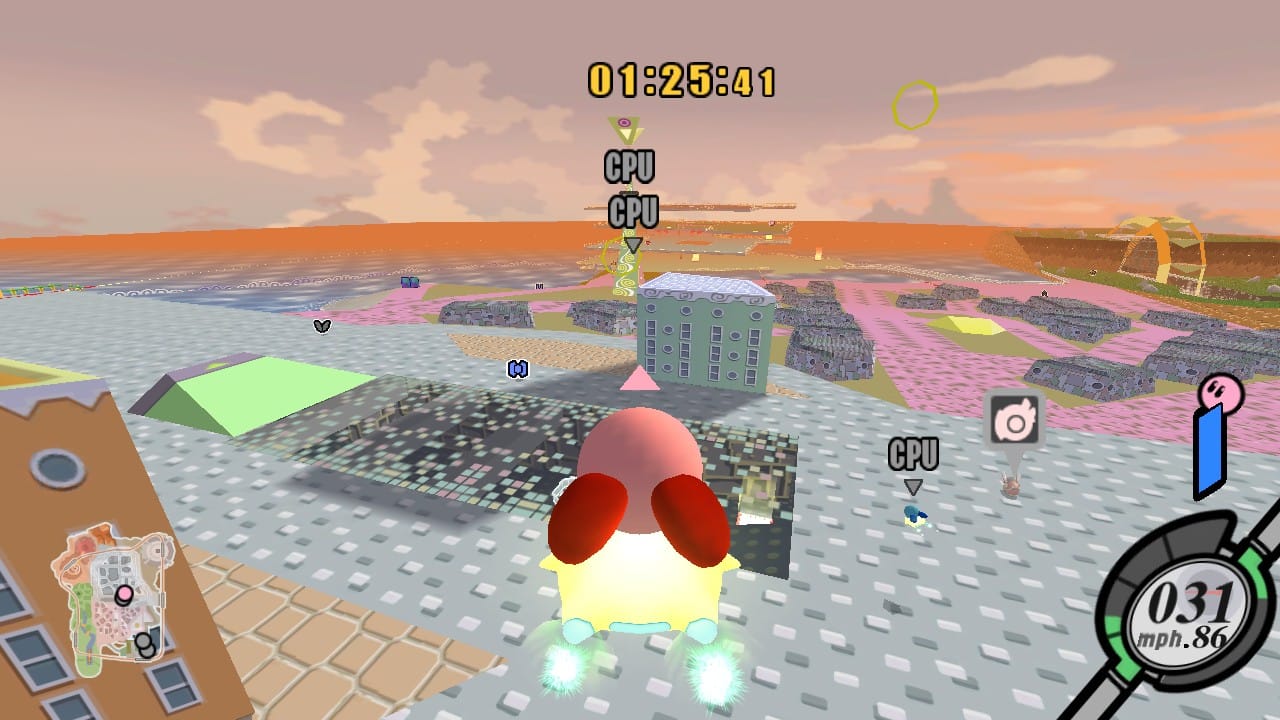
Through Aurora and custom shader patches, the recomp delivers breathtaking visual upgrades:
- Flawless Widescreen: Renders 3D viewports at arbitrary aspect ratios (16:9, 21:9 ultrawide, and beyond) while intelligently pinning 2D interface clusters to the viewport edges so meters and timers never float awkwardly in mid-air.
- High Refresh Rate Motion (120Hz / 144Hz): While Sakurai's core game simulation remains locked to its authentic 60 Hz physics loop, the engine generates intermediate motion frames to deliver buttery-smooth camera and object motion on modern high-refresh gaming monitors.
- In-Engine Graphics Menu: Pressing F1 calls up an integrated settings menu styled with the game's original fonts and user interface art, providing instant control over display modes, frame interpolation, and audio balances.
The Holy Grail: 8-Player Online City Trial
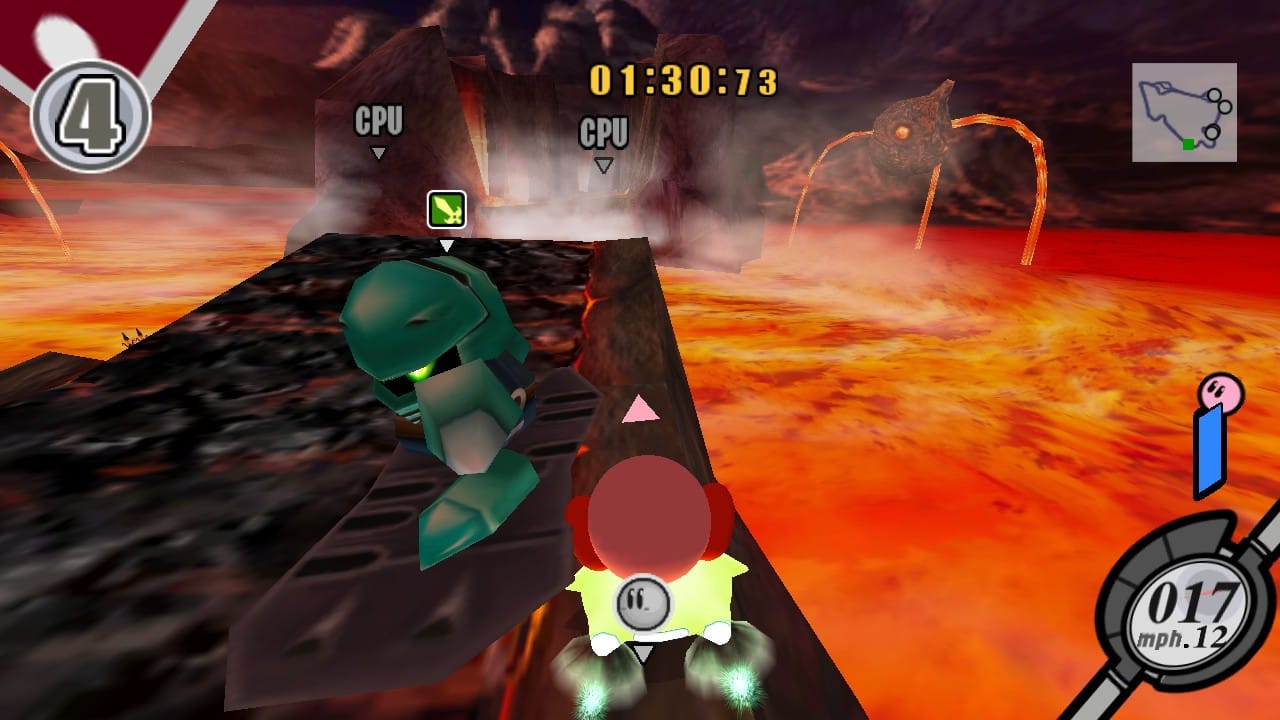
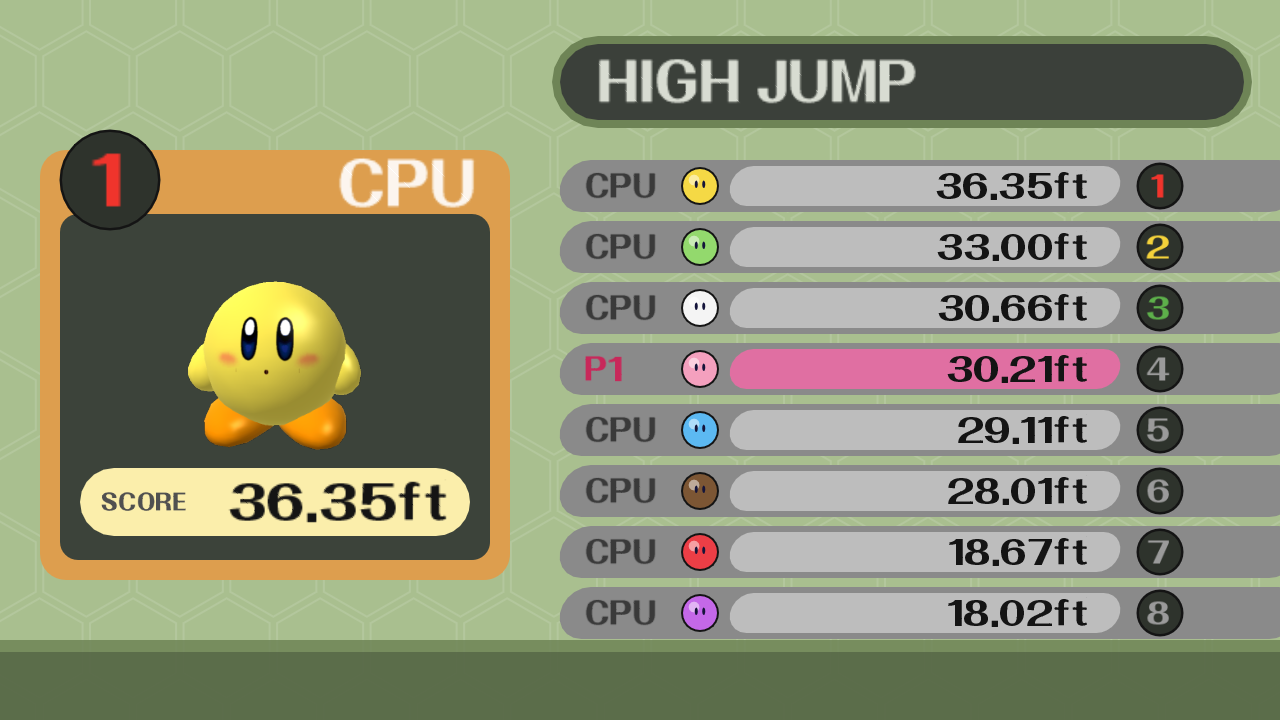
The crown jewel of this recompilation is a monumental engineering feat: eight-player online multiplayer in City Trial.
On original GameCube hardware, City Trial was hardcoded to a maximum of four players via local split-screen or LAN cables, backed by an internal five-slot player table (four human riders and one reserved slot for King Dedede in stadium boss encounters). sonsegajp painstakingly reverse-engineered the player allocations at memory address 8055A9F0, expanding the player arrays, HUD layouts, stadium arenas, and result calculations to accommodate eight independent riders.
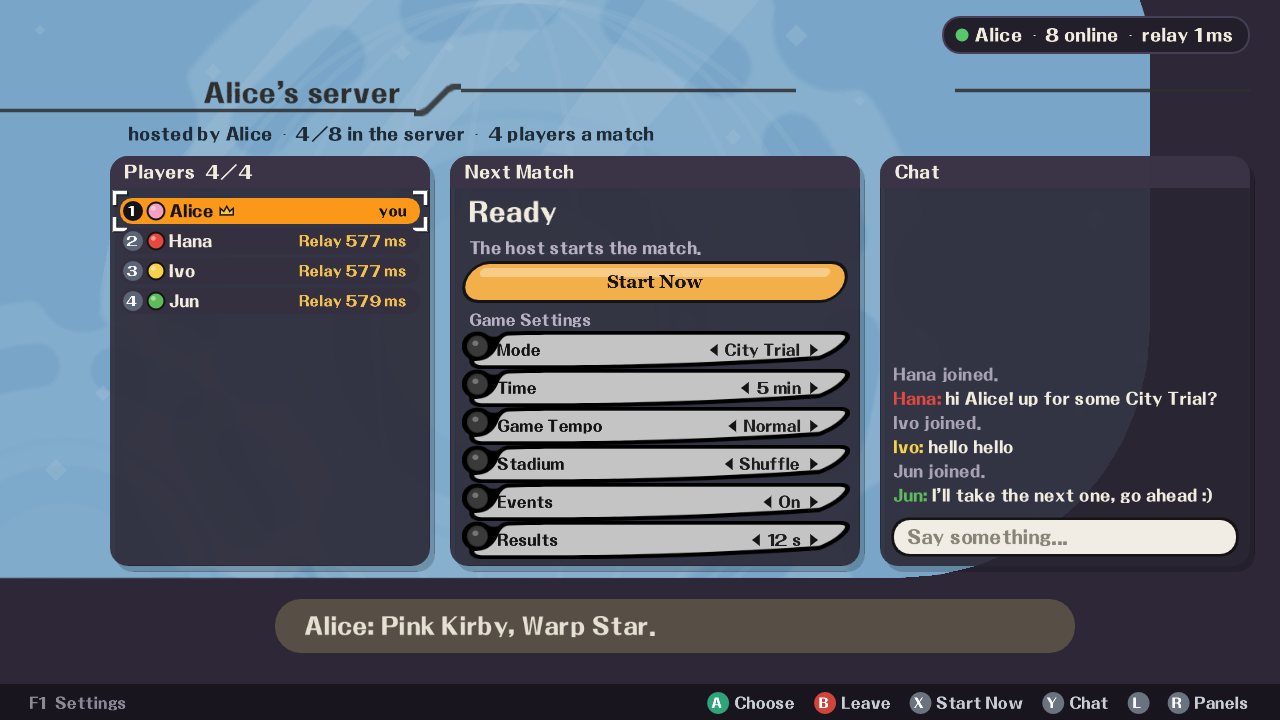
To enable online matches across eight separate PCs, the project revamped the GameCube LAN packet protocol. Secondary players on each network connection are multiplexed onto virtual controller ports, allowing eight riders across eight separate machines to synchronize in flawless lockstep:
- Integrated Server Browser and Lobbies: Built-in client menus let players create accounts, browse active games, chat in pre-game lobbies, and customize match rules.
- Peer-to-Peer with Relay Fallback: Low-latency UDP connections stream directly between players, automatically routing through a server relay if a player is behind a restrictive NAT.
- Standalone Dedicated Server: Anyone can host their own public or private community server using the lightweight Python-based
AirRideServerdaemon, requiring just two open network ports (TCP 27600 and UDP 27601).
Clean Architecture and Seamless Setup
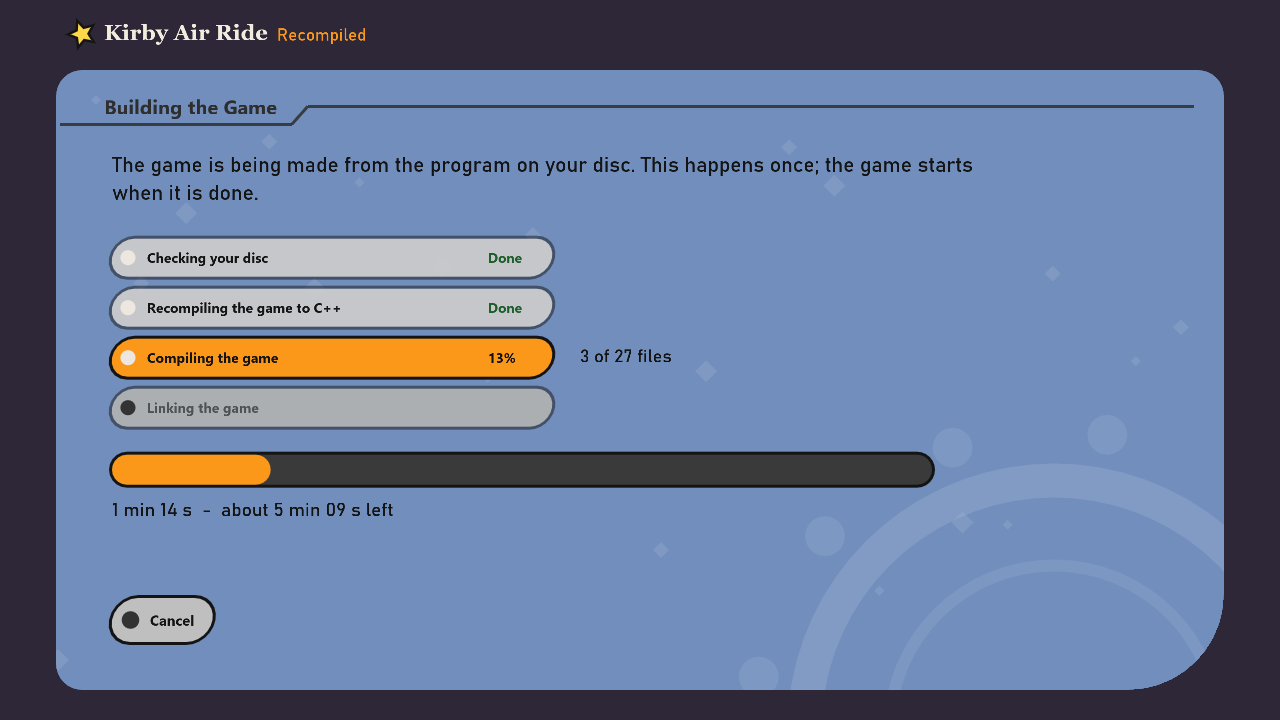
In accordance with established clean-room game preservation ethics, Kirby Air Ride: Recompiled distributes zero copyrighted game assets, music, or game binaries. The GitHub release provides the open source runtime, the recompiler engine, and a preconfigured LLVM 19.1.5 compiler toolchain.
When users launch kirbyairride.exe for the first time and provide their legally dumped GameCube disc image (USA release GKYE01 in .iso, .gcm, .rvz, .ciso, or .wia format), the application verifies the disc's SHA-1 signature, recompiles the PowerPC binary to C++, and compiles a native kirbyairride_game.dll in approximately three minutes. From that moment forward, the game launches instantly.
Ready to take to the skies and assemble the Dragoon with your friends? Download the latest release, view the server hosting guides, and inspect the open source codebase on GitHub: sonsegajp/Kirby-Air-Ride-Recompiled.