
Every few months, like clockwork, someone on social media stumbles across the concept of a modern Steam Controller and asks the inevitable question: Does anyone actually still talk about this thing?

It's been 5 months. Does anyone even still talk about this thing?
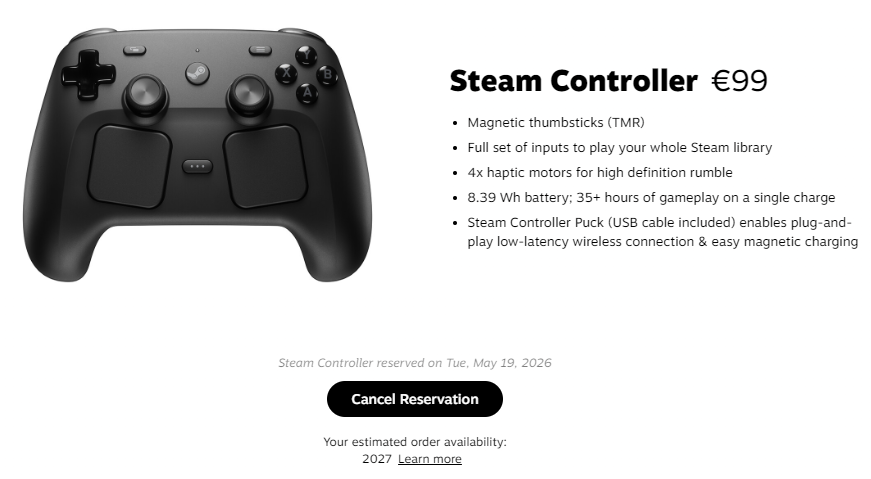
Allow us to answer that question clearly, definitively, and without hesitation: not only do people still talk about it, but around here, we use it every single day.
In an industry flooded with endless iterations of the exact same dual-analog gamepad formula first codified in the late 1990s, the Steam Controller lineage stands as a singular, uncompromising monument to hardware ambition. It is the greatest input philosophy ever brought to living-room gaming. Today, we are putting an end to the disrespect and officially declaring the Steam Controller as the Official Controller of allnight.city.
The Perfect Synthesis: Modern Steam Controller Architecture
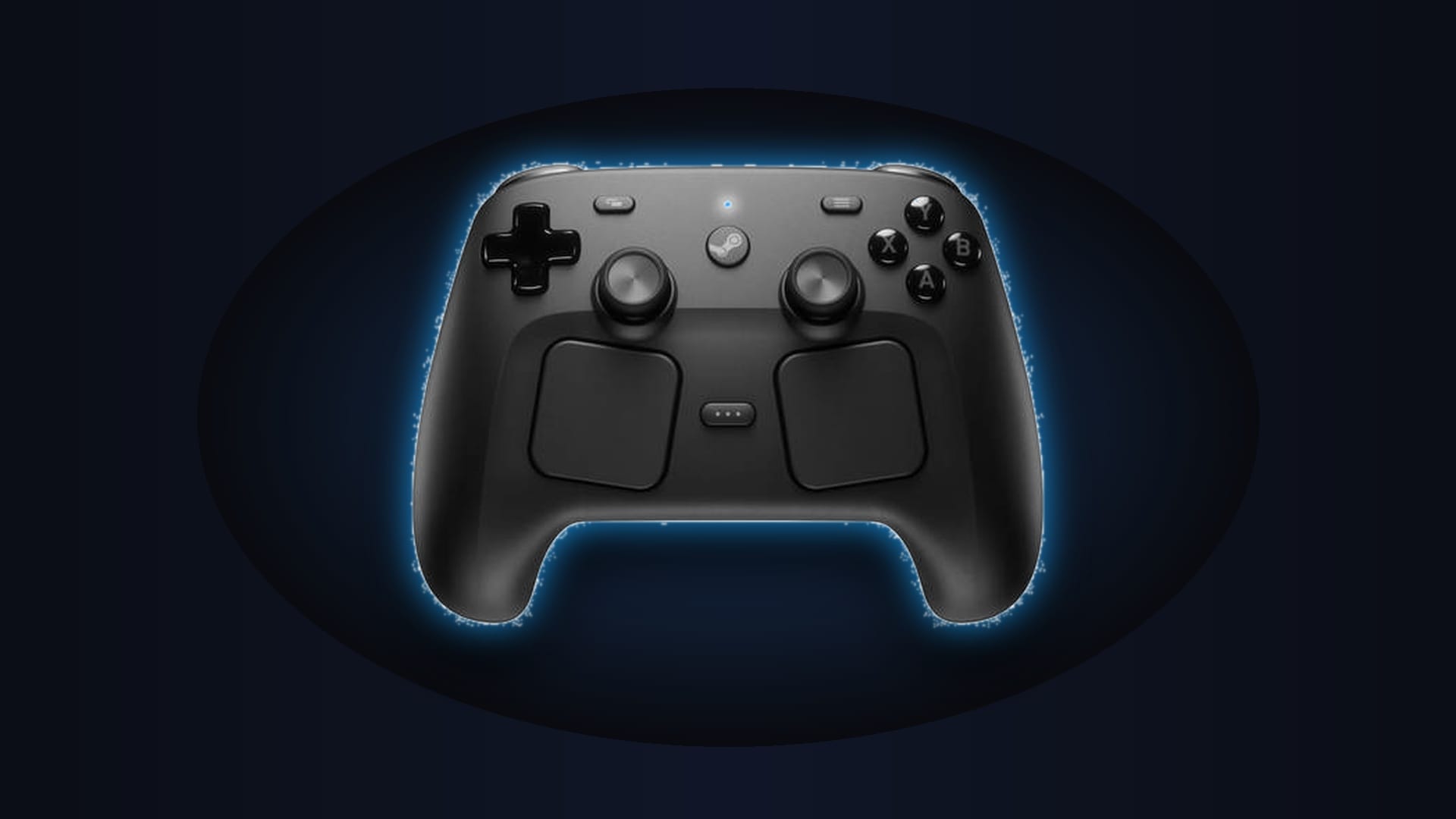
The design making the rounds on social media represents the holy grail of modern PC input: the complete fusion of traditional gamepad ergonomics with the game-changing input architecture pioneered by the Steam Deck. Take a close look at the hardware layout:
- Dual Symmetrical Analog Thumbsticks: Elevated at the primary thumb resting position, providing immediate, zero-compromise precision for traditional 3D platformers, twin-stick shooters, and racing games.
- Classic D-Pad and ABXY Cluster: Positioned on the upper wings, ensuring authentic retro gaming tactile feel for fighting games and 2D platformers.
- Dual Lower Square Haptic Trackpads: Positioned ergonomically beneath the thumbsticks, these identical Steam Deck-style trackpads unlock desktop cursor navigation, trackball inertia, sub-pixel mouse aiming, and radial action menus.
- Central Command Hub: Featuring the glowing Steam guide button, dedicated View and Menu buttons, and the vital three-dot (…) Quick Access Menu button for instant system performance overlays and controller remapping.
This layout solves the fundamental dilemma that divided gamers on the original 2015 unit. Rather than forcing players to choose between analog thumbsticks or touchpads, it delivers both simultaneously in an ergonomic powerhouse.
Ten Years Ahead of Its Time
When Valve launched the original Steam Controller in November 2015 alongside the first wave of Steam Machines, mainstream gaming journalism suffered collective cognitive dissonance. Reviewers, conditioned by decades of Xbox 360 and PlayStation pad muscle memory, picked up the controller and expected it to behave like a standard console gamepad.
They missed the entire point. Valve did not set out to build another mindless clone for twin-stick console shooters. Valve set out to solve the holy grail of PC gaming: how to bring the infinite depth, precision, and freedom of mouse-and-keyboard PC gaming to the living room couch without compromising the experience.
To achieve that, Valve threw out conventional gamepad dogmas and built an engineering marvel from first principles:
- High-Resolution Haptic Actuators: The linear resonant actuators provided tactile clicks that gave your thumb genuine physical inertia. You could flick the pad to whip a 180-degree turn in an FPS, or make microscopic micro-adjustments with mouse-level sub-pixel accuracy.
- Dual-Stage Triggers: Years before the PlayStation 5 popularized adaptive resistance, the Steam Controller gave players a silky analog pull for throttle or aiming down sights, culminating in a satisfying tactile mechanical microswitch click at the bottom of the stroke for weapon firing or handbrakes.
- Ergonomic Rear Grip Paddles: Integrated directly into the battery door cover, these rear paddles gave players crucial modifier keys without lifting their thumbs from the pads, long before competitors began charging $180 premium prices for "pro" controllers.
- Hardware Gyro Aiming: The onboard gyro was not a gimmicky motion waggle. Paired with trackpad touch activation, it pioneered modern controller flick-stick and gyro aiming, bridging the competitive gap against mouse users in tactical shooters.
- Immortal Battery Life: Delivering 60 to 80 hours of active gameplay without proprietary lithium pouch batteries slowly swelling into planned obsolescence.
Steam Input: The Software Stack That Conquered Couch Gaming
A brilliant hardware design is meaningless without software, and this is where the Steam Controller ecosystem became completely untouchable. To power the device, Valve engineered Steam Input, the most sophisticated, customizable input translation engine in video game history.
With Steam Input, games that had been strictly deemed "unplayable with a controller" suddenly opened up from the couch:
- 4X Grand Strategy: Games like Civilization VI, Stellaris, and Crusader Kings became effortless to navigate using mouse-region mappings and scroll wheels mapped to the trackpad edge.
- Classic CRPGs and Point-and-Click: Isometric classics like Baldur's Gate, Divinity: Original Sin, and Disco Elysium feel like native touch experiences.
- Radial Touch Menus: Hovering your thumb over the trackpads spawns an on-screen transparent HUD menu with up to 16 custom hotkeys, weapon wheels, or macro commands.
- Desktop Mode: It remains the only gamepad design on the market that allows complete, seamless desktop navigation, web browsing, video scrub, and media control without ever reaching for a physical mouse.
The DNA of Modern Valve Hardware
When Valve eventually sunset production of the original Steam Controller in late 2019 (selling off remaining warehouse stock in the legendary $5 clearance that crashed the Steam store servers), skeptics claimed the experiment had failed. History proved the exact opposite.
The modern Steam Deck is the living incarnation of this hardware revolution. The dual haptic trackpads, rear grip buttons, capacitive thumbsticks, gyro integration, and Steam Input overlay all trace their roots directly back to Valve's initial controller experiments.
Even in 2026, when new third-party controllers appear on store shelves, they almost always regress back to the safe, boring status quo: two analog sticks, four face buttons, and plastic shells that feel identical to a controller from 2005.
The Steam Controller dared to imagine something radically better. It challenged players to rethink how humans interface with software. It earned its battle scars, its cult following, and its permanent place on our desks.
So to anyone asking if people still talk about the Steam Controller: yes, we do. We talk about it, we game with it, we swear by it, and today we make it official. Long live the king.