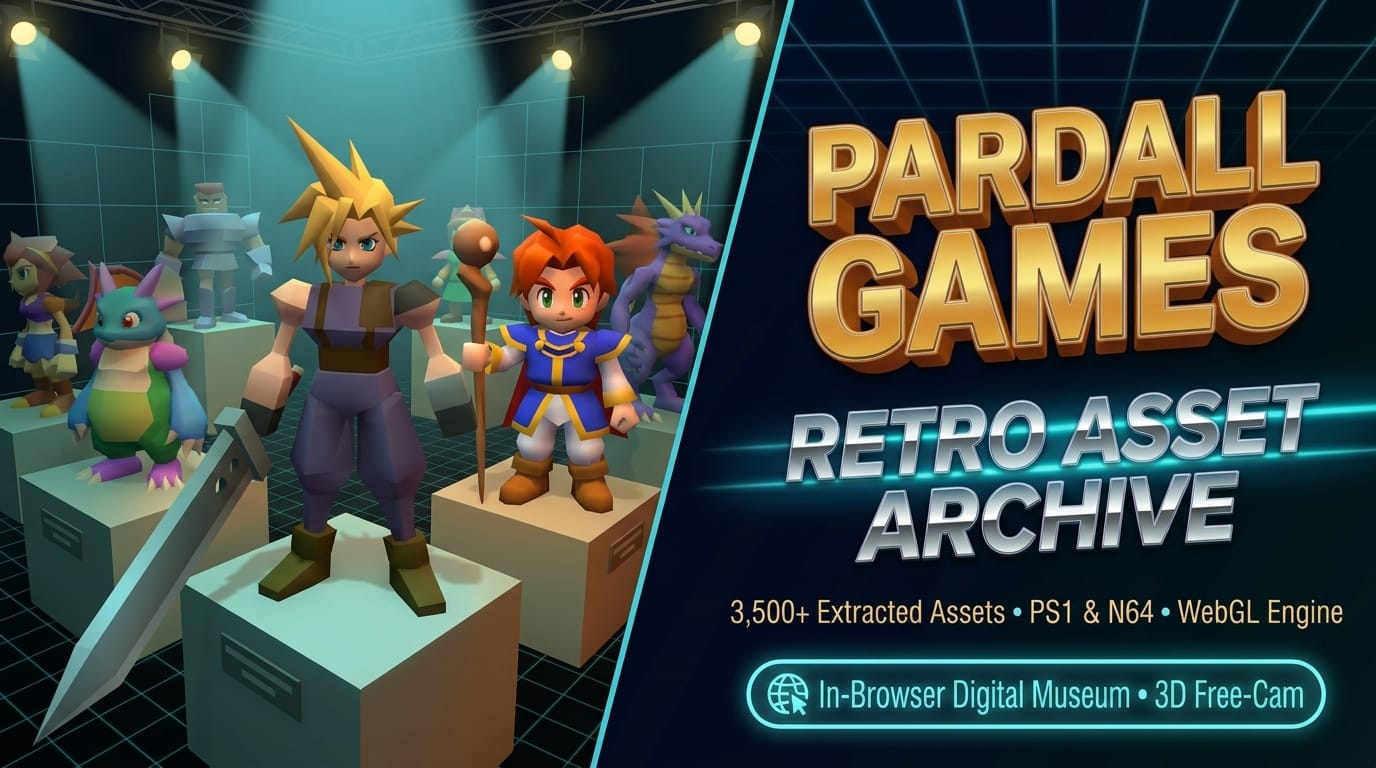

At the turn of the millennium, as video games made their historic, turbulent leap into three dimensions, developers were forced to invent wildly disparate architectures to sculpt virtual worlds out of raw silicon. For modern preservationists, this era—the 32-bit and 64-bit dawn—has long represented the most brittle, endangered frontier of gaming heritage. Unlike the clean sprite sheets and tilemaps of the 16-bit era, early 3D titles relied on bespoke vertex formats, custom display lists, proprietary animation hierarchies, and hardware-specific rasterization quirks.
For decades, experiencing these historic assets meant two imperfect extremes: either running heavyweight console emulators with virtual memory cards and ISO dumps, or browsing static, untextured OBJ rips on asset repositories. But this week, indie developer and software architect Alfred Reinold Baudisch (known across the developer community as Pardall) unveiled something that fundamentally reshapes retro game preservation: the Pardall Games Retro Asset Library.
Pardall Games Retro Asset Library is now live! An interactive 3D digital museum preserving PS1 & N64 video game history. Fully running in your browser via WebGL. 3,500+ assets extracted, including massive Final Fantasy VII reverse-engineering.
— Pardall Games (@PardallGames) September 28, 2026
This is not a simple static model viewer. It is a full-fledged, web-based interactive digital museum that reverse-engineers original PlayStation 1 and Nintendo 64 game binaries, extracts their raw geometry, vertex colors, bone hierarchies, and camera matrices, and executes them in real time directly within any modern web browser via WebGL.
The Pre-Rendered Renaissance: Walkable Scenes & Authentic Cameras
One of the library’s crowning achievements is its re-creation of the pre-rendered cinematic environments that defined the late-90s golden age. In games like Resident Evil 2 and Final Fantasy VII, developers pushed technical boundaries by placing low-polygon 3D characters atop exquisite, pre-rendered 2D background illustrations. These scenes were governed by intricate invisible math: precise camera frustums, focal lengths, trigonometry, and polygonal collision floors (navmeshes) tucked into the game’s code.
Rather than merely showcasing isolated character models, Pardall’s library reconstructs entire environmental stages. In the Resident Evil 2 Walkable Scene Demo, users can guide a fully animated 3D model of Leon Kennedy across the marble floors and dimly lit hallways of the Raccoon City Police Department. As you navigate the room, the browser engine listens to authentic trigger boundaries, seamlessly switching between fixed camera angles that match Capcom’s exact 1998 cinematography.

In the Final Fantasy VII scene archives, users can inspect field environments populated with interactive spinning save crystals, treasure chests, and pulsing materia orbs. Every prop sits on its authentic coordinates, allowing digital historians to study how Squaresoft’s level designers married 2D art with 3D space nearly thirty years ago.
The Summons Theater: Executing PS1 Assembly Scripts in WebGL
While walking through pre-rendered police stations is thrilling, the technological showstopper of the Pardall Library is the Final Fantasy VII Summons Theater.
In original PlayStation Final Fantasy VII, summoning spells were not pre-recorded FMVs; they were intricate real-time scripted orchestrations. They tied together dynamic camera splines, multi-part skeletal hierarchies, particle emitters, screen-distortion shaders, sound triggers, and variable timing loops running directly on Sony’s Geometry Transformation Engine (GTE).

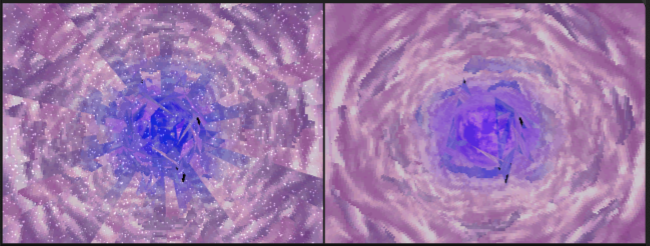
Pardall reverse-engineered the original summon script opcodes and built an interpreter inside the browser. When you load iconic invocations like Knights of the Round, Odin, Bahamut ZERO, or Sephiroth’s apocalyptic Supernova, the browser executes the original game choreography down to the exact frame.
Crucially, because this is rendering live 3D geometry rather than a video playback, the library unlocks controls that console players could only dream of in 1997:
- Full 3D Free-Cam: Disengage the cinematic director at any millisecond to freely orbit, pan, and zoom around the battlefield.
- Temporal Scrubbing: Pause mid-strike to examine how multi-stage explosions and environmental transformations are constructed.
- Wireframe & Vertex Inspection: Strip away textures to witness the ingenious low-poly modeling tricks that artists used to bypass the PS1’s 360,000 polygon-per-second hardware ceiling.
The 3D Inspector: A Masterclass in Low-Poly Optimization
For 3D artists, game developers, and technical directors, the library serves as an unprecedented technical textbook. Each model entry features a robust diagnostics suite:
- Triangle & Vertex Metrics: Real-time counts revealing how developers built entire worlds with fewer polygons than a modern indie title uses for a single coffee mug.
- Vertex Color Lighting: The ability to isolate raw vertex colors. Early 3D engines, lacking programmable pixel shaders, relied heavily on vertex tinting to simulate ambient shadows, magical glows, and atmospheric fog. Toggling this view reveals the astonishing painterly craft behind every model.
- Interactive Equipment & Weapon Swapping: In the character model viewers (such as Cloud Strife), users can dynamically attach and cycle through authentic weapons—from the Buster Sword to the Ultima Weapon—testing how original socket attachment points were handled.
- Animation Matrix Scrubbing: Cycle through battle idle stances, victory fanfares, run cycles, and death collapses with frame-accurate interpolation controls.
Expanding to the 64-Bit Frontier: Quest 64 & Cult Classics
While the initial launch focused heavily on PlayStation landmarks, September 28 marked a major architectural milestone: the rollout of the archive’s first Nintendo 64 catalog, bringing 585 extracted assets from Quest 64 (Holy Magic Century) into the browser.
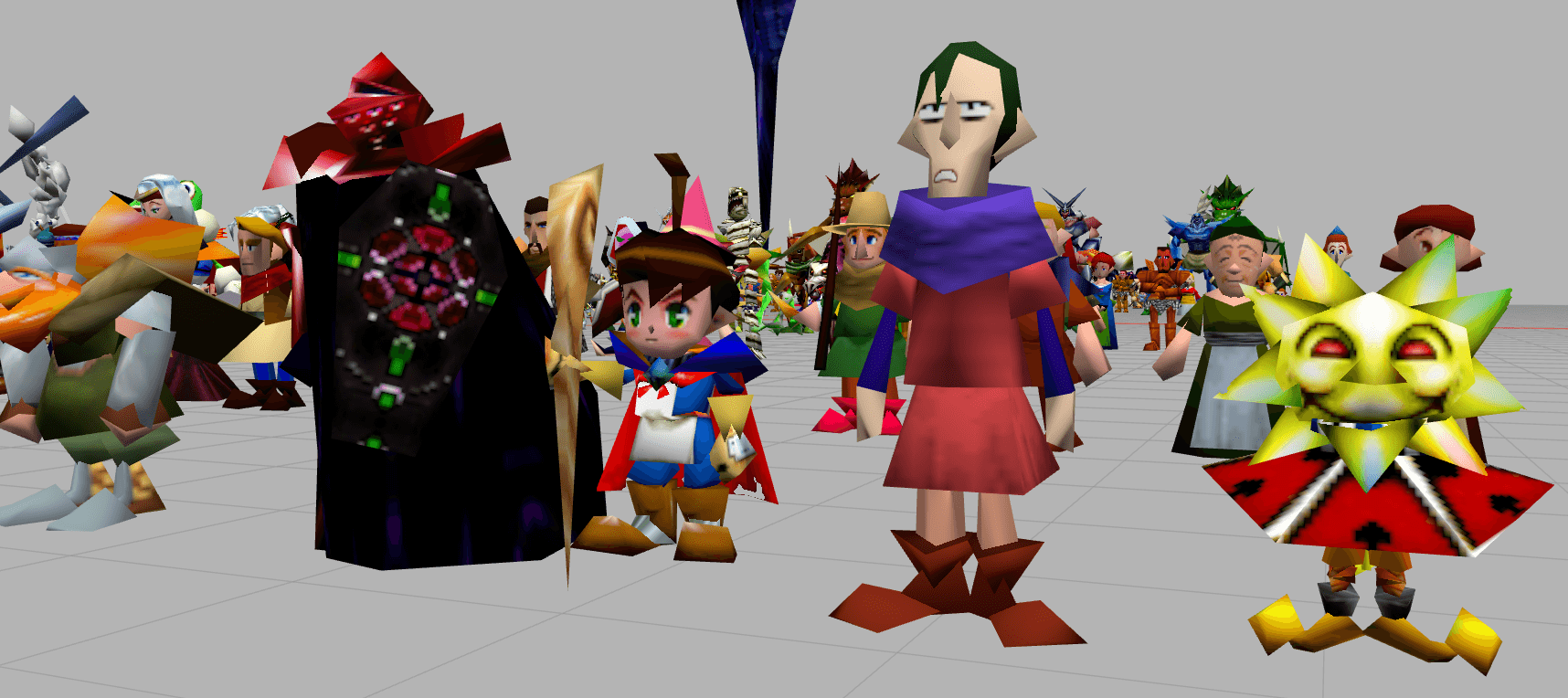
Preserving Nintendo 64 assets presents unique technical hurdles compared to the PS1. Where Sony’s architecture used straightforward fixed-function DMA transfers, the N64 relied on custom microcode running on the Reality Signal Processor (RSP) to generate Display Lists, along with proprietary texture format conversions (RGBA16, CI8 palettes). Baudisch’s pipeline parses these display lists directly into modern shader pipelines without losing authentic vertex shading or edge filtering.
Pre-rendered scenarios with real fixed-camera transitions in Resident Evil 2, Baroque, King's Field, Boku no Natsuyasumi, and 30+ games on the roadmap! Walk through the RPD, test cameras, and inspect summons in free-cam.
— Pardall Games (@PardallGames) September 28, 2026
Alongside mainstream headliners, the library is already home to cult treasures that rarely receive preservation attention:
- Baroque: Sting’s surreal, post-apocalyptic dark fantasy roguelike, complete with nightmarish grof designs and warped biological geometries.
- King’s Field: FromSoftware’s moody 1994 dungeon crawler that laid the foundational design DNA for Demon’s Souls and Dark Souls.
- Boku no Natsuyasumi: Millennium Kitchen’s beloved summer vacation simulator, offering a masterclass in nostalgic rural dioramas and pastoral atmosphere.
A Living Archive for the Web Era
With over 3,521 models already indexed and a public roadmap outlining support for more than 30 classic titles across PS1, N64, and Sega Saturn, the Pardall Games Retro Asset Library represents an inspiring leap forward for video game history.
For years, retro gaming enthusiasts have lamented how the foundational era of 3D game development remains locked away—trapped behind proprietary media formats, disc rot, and complex emulation setups. By freeing these polygonal masterpieces into lightweight, zero-install WebGL environments, Alfred Baudisch hasn’t just built a repository. He has built a living, open-air digital museum where anyone, on any device, can wander through the architecture that created modern gaming.
“Explore the library today at library.pardallgames.com and follow the ongoing reverse-engineering roadmap via @PardallGames on X.”