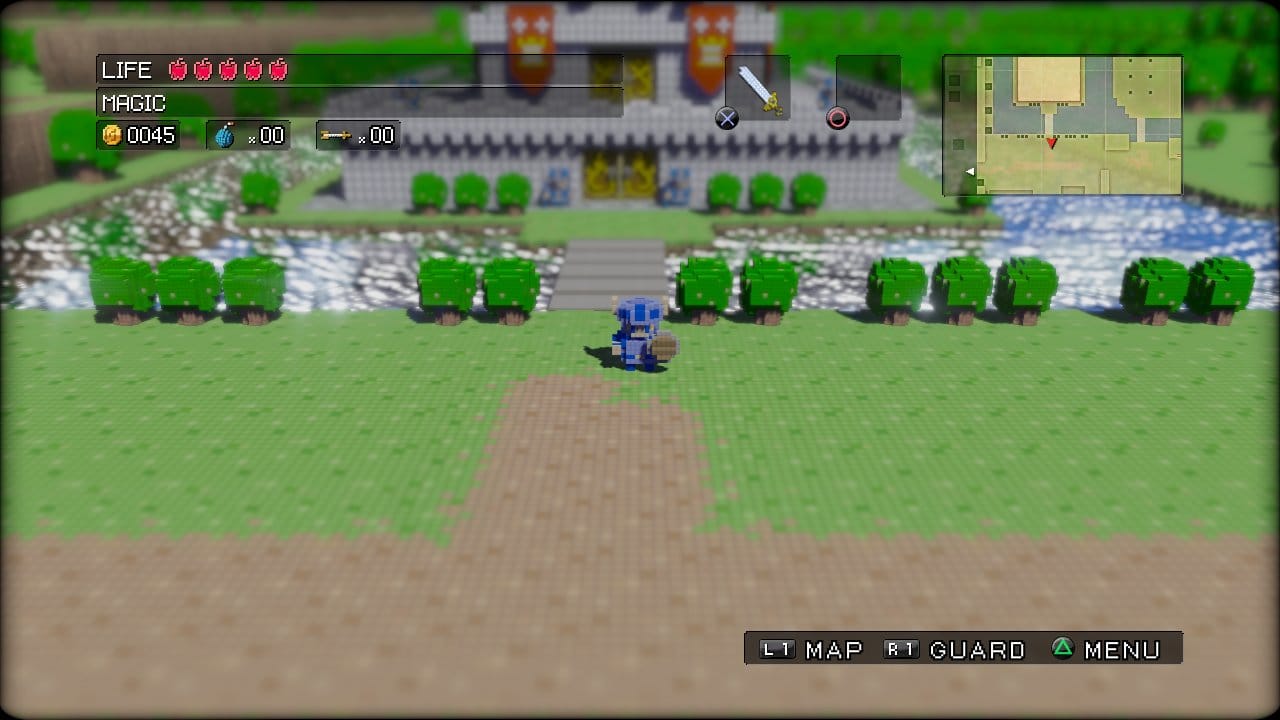

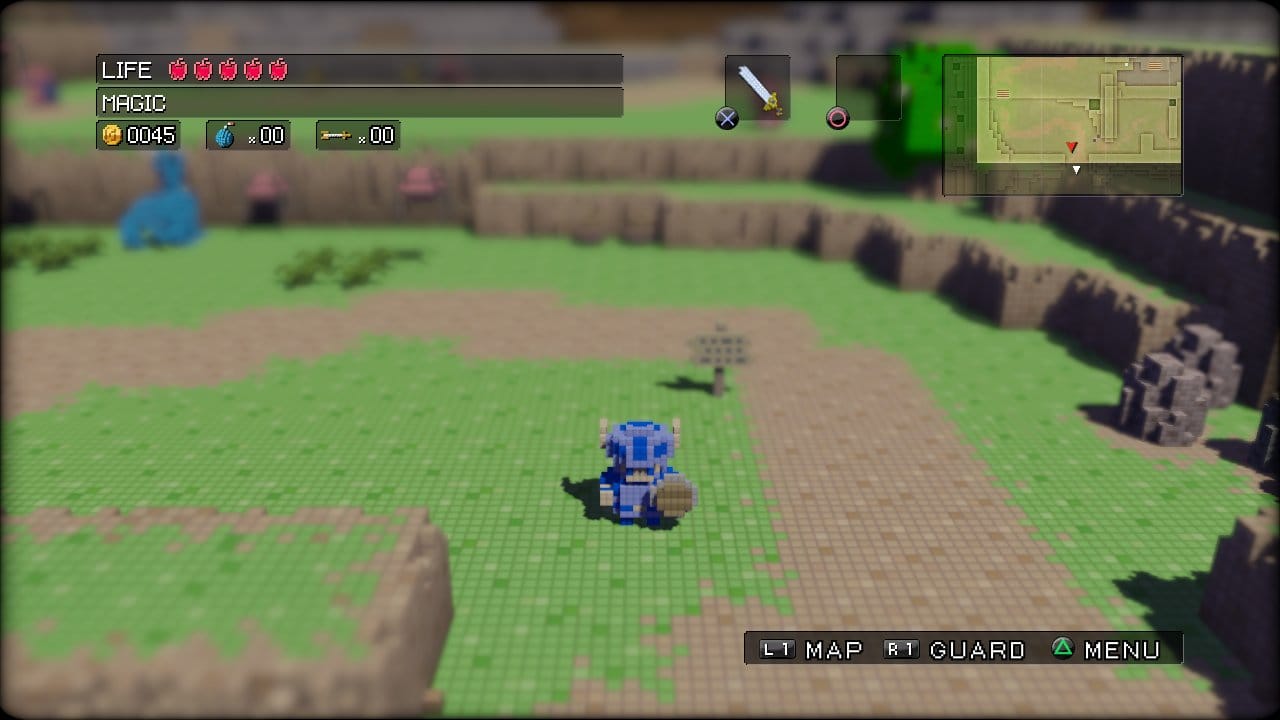
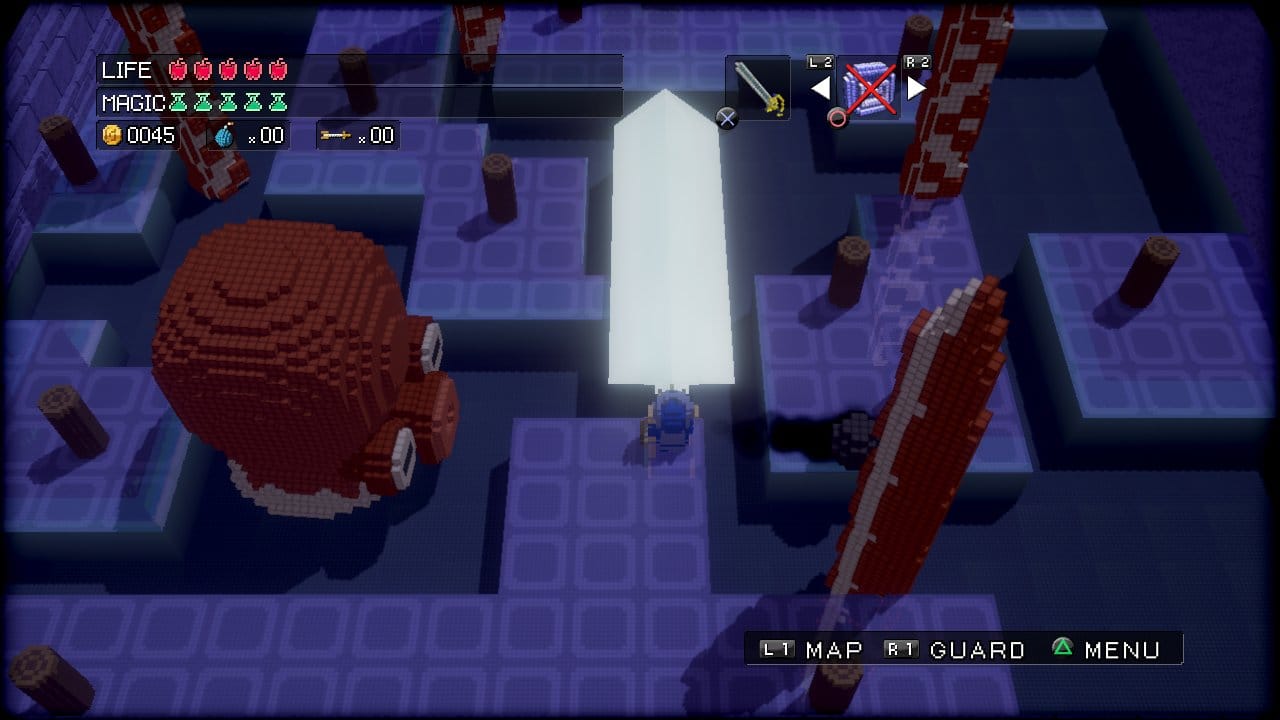
devs who love classic games often talk about preservation, but the seventh console generation has spent the last decade trapped in an architectural purgatory. Nowhere is that clearer than with 3D Dot Game Heroes. Developed by Silicon Studio, published by FromSoftware in Japan in 2009, and brought westward by Atlus in 2010, the title was an exuberant, affectionate celebration of the original 8-bit Legend of Zelda. Before voxel games became ubiquitous, it rendered a sprawling fantasy kingdom entirely out of shimmering, destructible 3D blocks—pairing nostalgic top-down dungeon crawling with modern depth-of-field, realistic water physics, ragdoll physics, and screen-clearing sword animations.
Yet for over sixteen years, the game has been confined to the PlayStation 3. While the RPCS3 emulation project has achieved remarkable compatibility with the title on modern high-end desktops, emulating Sony's notoriously idiosyncratic Cell Broadband Engine—with its PowerPC Processing Element (PPE) and six active Synergistic Processing Elements (SPEs)—imposes massive CPU overhead, frequent shader compilation pauses, and punishing battery draw on handhelds like the Steam Deck. Now, developer irnutsmurt has delivered a breakthrough with Cubic.Heroes: a native, static recompilation that liberates the game into a standalone Linux and Windows executable.
How It Works: Lifting the Cell to Native x86-64
Following the static recompilation techniques that recently transformed N64, Saturn, and original Xbox preservation, Cubic.Heroes does not interpret machine code or run a just-in-time (JIT) translation layer while you play. Instead, it extracts the retail PS3 executable's PowerPC 64-bit instructions ahead of time (AOT) and translates them into native C and Zig object units.
Under the hood, the project builds on the emerging ps3recomp static analysis framework:
- 48 Split PPU Compilation Units: The game's primary PowerPC binary is lifted into 48 modular source blocks (compiled via Zig 0.17 into an optimized 102 MB native ELF binary on Linux).
- Native SPU Workloads: Rather than emulating the Cell's vector-heavy SPUs through microcode translation, the game's intensive co-processor routines—including real-time water wave propagation, ragdoll solvers, and audio mixing—have been reconstructed as native multi-threaded CPU tasks.
- Vulkan Graphics Pipeline: The PS3's proprietary Reality Synthesizer (RSX) commands are translated directly into a modern Vulkan backend. Crucially, the installer precompiles all 2,458 pipeline permutations during setup, eliminating in-game shader stutter entirely.
- Decoupled Media & Sound: Native OpenAL Soft handles 3D positional audio, while FFmpeg (LGPL v2.1+) decodes cinematics without requiring Sony's proprietary PAMF or ATRAC codecs.
The result is immediate: smooth 60 FPS gameplay (with support for higher refresh limits including 90 and 120 FPS), arbitrary display resolutions from 720p up to 4K, native gamepad mapping with automatic prompt detection, and lightning-fast load times.
Clean-Room Preservation: What You Need
As with all reputable recompilation efforts, Cubic.Heroes maintains a strict legal and architectural clean-room boundary. The GitHub repository contains zero game code, copyrighted assets, proprietary firmware files, or decryption keys.
To build and play the port, players supply their own retail game files:
- A retail copy of 3D Dot Game Heroes: The North American Blu-ray release (
BLUS-30490, disc v01.00) is the primary target, supported alongside European and Japanese disc dumps. - Decrypted Executable: A decrypted
EBOOT.elf(which can be cleanly decrypted from your legally backed-upEBOOT.BINusing tools like RPCS3's--decryptcommand line flag). - Automated Local Installer: The release package includes the
CubicHeroestoolchain, which validates the SHA-256 hash of your ELF (ed581bd74a88...), extracts the disc assets, compiles the native runtime, generates the Vulkan cache, and builds the ready-to-run game locally on your hardware.
The allnight.city Slant: The Seventh-Generation Barrier Has Fallen
For years, conventional wisdom held that static recompilation was practical only for cartridges and early disc systems: the Nintendo 64 (Super Mario 64, Zelda 64: Recompiled), the PS1, the Sega Saturn, or at most the single-threaded x86 architecture of the original Xbox. The PlayStation 3, with its asynchronous dual-architecture Cell processor, was widely considered too complex for static translation without full system emulation.
Cubic.Heroes proves that assumption wrong. By separating the PPU's control flow from SPU task offloading and restructuring those tasks as cooperative threads on modern multi-core x86-64 silicon, static recompilation can tame the Cell. For handheld gaming, this distinction is everything: instead of melting battery life trying to emulate a 3.2 GHz PowerPC architecture through a compatibility abstraction layer, the machine simply runs a lean, native binary executing compiled C/Zig code directly on the Linux kernel.
If 3D Dot Game Heroes can be liberated from the PS3's exotic silicon, the door is officially open for other games languishing in Seventh-Gen limbo. The code is available now on GitHub under the GPL-3.0 license.
Sources: irnutsmurt/Cubic.Heroes (v0.2.0-beta.4, GPL-3.0), upstream documentation, and local build verification on Linux x86_64.