

There is a profound disconnect at the very top of Epic Games. For years, Tim Sweeney and his executive team have treated PC gaming as an engineering optimization puzzle and an antitrust battlefield. They believed that if they simply poured hundreds of millions into paid exclusives, handed out free weekly games like digital candy, and shaved a few hundred milliseconds off their launcher’s startup time, PC gamers would flock to the Epic Games Store. But while Epic was busy celebrating "vibe coding" an overhauled launcher that boasts a 5.47-second cold boot, Valve quietly reminded the entire industry why Steam is utterly untouchable: they actually understand the souls of PC gamers.
In a surprise Steam Client Beta update, Valve rolled out Steam Achievement Sets. On paper, it sounds like a straightforward feature update. In reality, it is a surgical masterclass in platform psychology—solving the single most infuriating problem that has plagued achievement hunters across PlayStation, Xbox, and Steam for the last two decades.
The Millisecond Illusion: Tim Sweeney’s Sterile Cashier
To understand why this Steam update is so humiliating for Epic, one must first look at the bizarre rhetorical corner Epic Games has backed itself into. Recently, Epic made waves across tech headlines by announcing an AI-assisted rewrite of the Epic Games Launcher, proudly touting that it was "built with vibe coding" and loaded roughly 46% faster than Steam from a cold boot.
Epic’s marketing pitch was clear: Look how fast our launcher opens! Why would anyone want a bloated client when you can have our lean machine?
The punchline arrived almost immediately. Valve released a routine client maintenance update that brought Steam’s startup time down to roughly 5.2 seconds, effortlessly erasing Epic’s benchmark brag without writing a single celebratory tweet or AI press release. But more critically, Sweeney’s obsession with launch speed exposed Epic’s fundamental, fatal blindness: gamers do not avoid the Epic Games Store because it takes four seconds longer to render an icon grid. They avoid it because it feels like an abandoned, featureless digital warehouse.
When you launch Epic Games Store, you are interacting with a point-of-sale terminal. There are no community forums to troubleshoot obscure driver bugs. There is no Steam Workshop where one click installs thousands of user-created mods. There are no rich user reviews with verified playtime stamps—only corporate-sanctioned exit polls. And most damningly, there is no sense of identity, investment, or community pride. It took Epic three full years just to add a shopping cart, and its tacked-on "Epic Trophies" system remains an underdeveloped ghost town that publishers barely bother to implement.
Steam is not an executable launcher; Steam is PC gaming’s living room. And with Achievement Sets, Valve just remodeled that living room with gold trim.
The 20-Year Curse of the 100% Completionist
Every trophy hunter and completionist knows the specific, burning agony of the DLC Dilution Curse.
Imagine this: you spend 120 hours in an expansive RPG or punishing souls-like. You hunt down every hidden collectible, conquer every optional super-boss on maximum difficulty, and earn that glorious 100% "Perfect Game" ribbon on your Steam showcase. It is your badge of honor.
Six months later, the publisher releases a $15 cosmetic pack or a 3-hour side story with three trivial new achievements. The instant that update deploys, your profile is defaced. Your hard-earned 100% completion plummets to 84%. Your "Perfect Game" counter ticks down by one. If you refuse to purchase the DLC, or simply don't have time to play it, your achievement showcase permanently brands you as incomplete.
This broken mechanic has contaminated every major platform since the dawn of the Xbox 360 Gamerscore and PS3 Platinum Trophies. Sony offered a half-hearted band-aid by separating DLC trophies under sub-folders while keeping the Platinum tied to the base game, but platform-wide completion percentages remained permanently dragged down by unowned content.
Valve didn’t just patch this annoyance—they re-architected the entire foundation of how PC accomplishments are tracked, earned, and commemorated.
Inside Steam Achievement Sets: How It Works
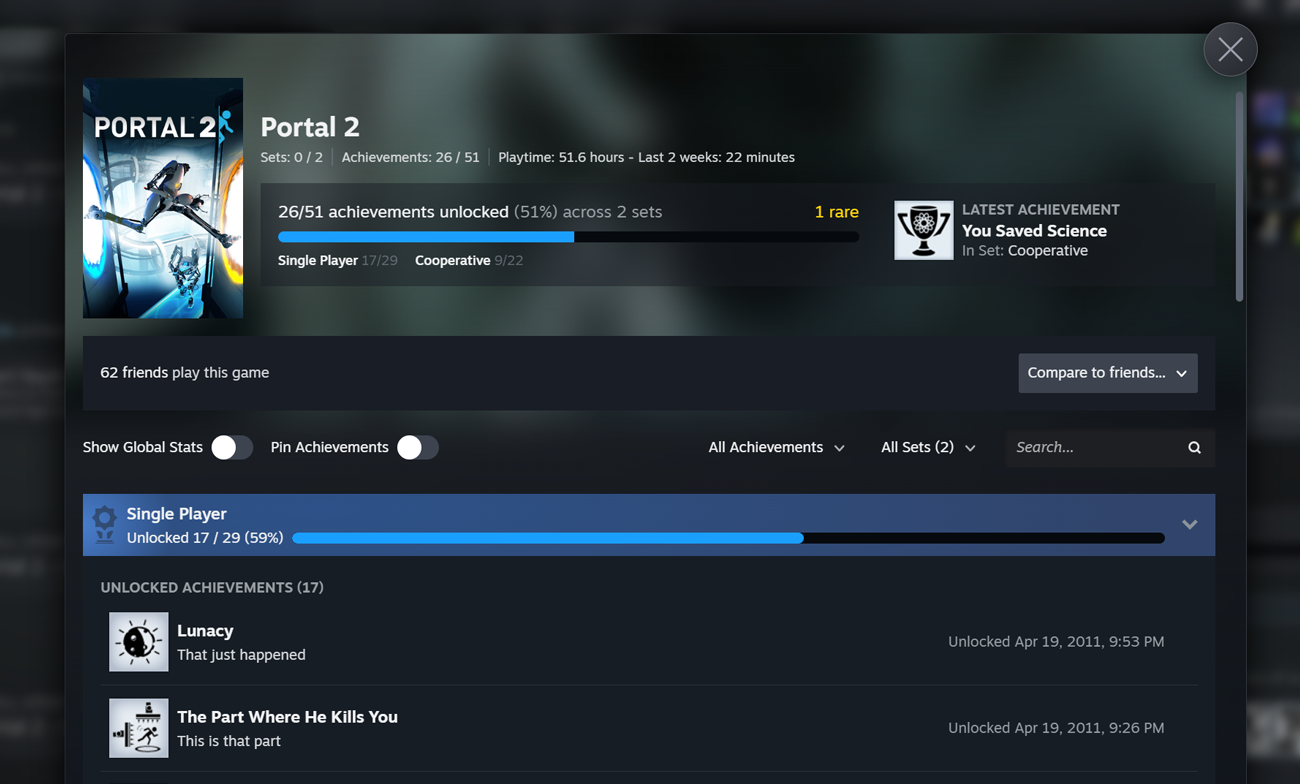
With this new beta, Valve has handed developers the power to group achievements into custom modular collections called Achievement Sets. Rather than a flat, unmanageable checklist of 150 disparate icons, achievements are now categorized into logical chapters, modes, and milestones.
1. Base Game Sets vs. DLC Sets
Valve has established a hard, immutable boundary between standard content and post-launch add-ons:
- Base Game Sets (Displayed in Blue): Encompasses all achievements available to anyone who owns the core game. When you finish all achievements in a base set, Steam awards a permanent "Set Complete" trophy. Crucially, if new achievements or expansions are added later, your prior completion status is preserved forever.
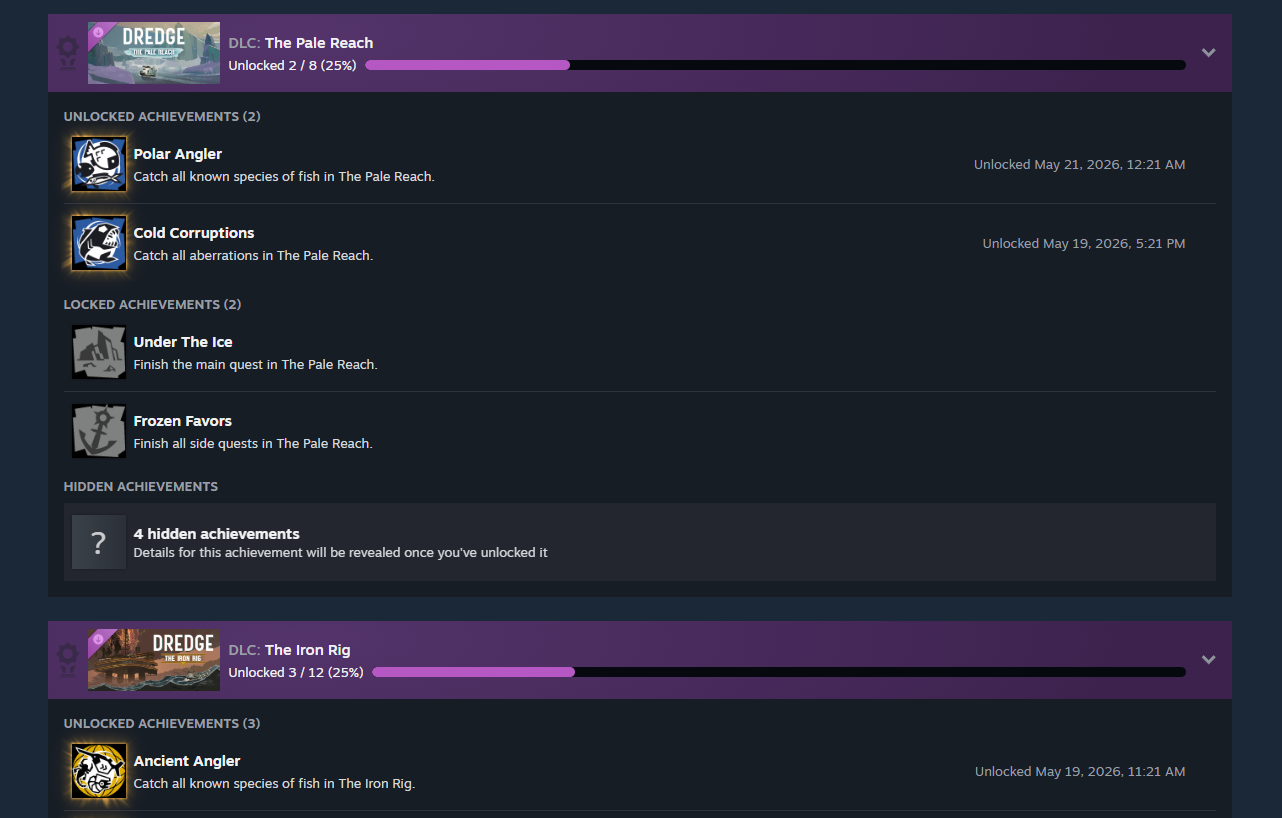
- DLC Sets (Displayed in Purple): DLC achievements no longer touch your overall game progress bar until you actually purchase and activate the DLC. If you don't own the expansion, it won't dilute your profile stats, drag down your average completion rate, or strip away your Completed Game status. Once you purchase the DLC, its achievements unlock as a separate purple set with its own distinct progress and trophies.
2. The Death of FOMO: Seasonal & Archived Achievements
Live-service titles, seasonal events, and multiplayer games have historically wreaked havoc on achievement systems. How many times have you looked at a game's achievement list only to realize that "Win a match during the 2018 Winter Gala" is forever impossible because the event ended eight years ago—or worse, because the multiplayer servers were shut down?
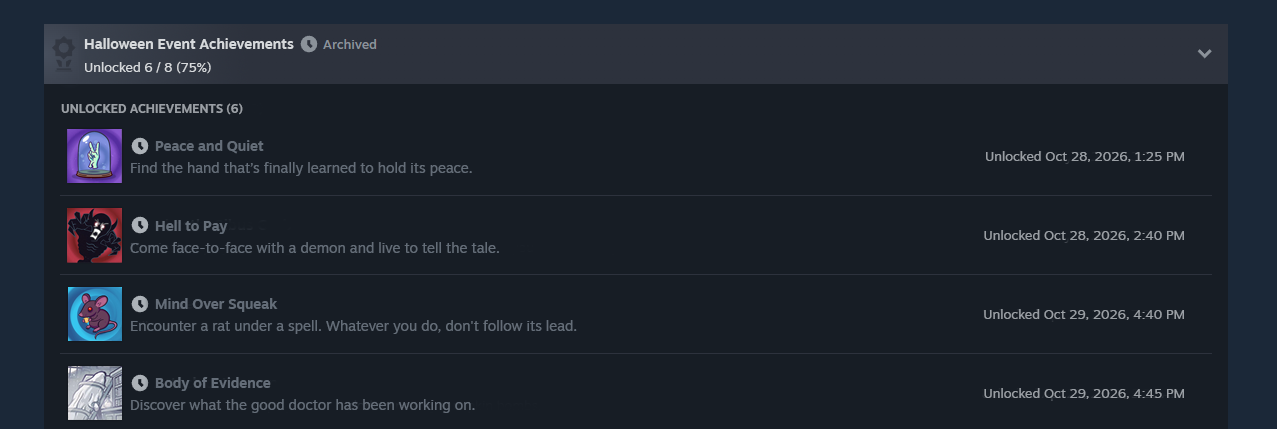
Valve’s solution is brilliant: The Archival System. Developers can now officially archive individual achievements or entire sets.
- Veterans who unlocked the achievement during the live event keep it on their profile permanently as a vintage badge of honor.
- New players who discover the game years later are not penalized: archived achievements disappear from their requirements and do not block them from achieving a 100% Completed trophy.
A Social Overhaul: The New Achievements Hub & 3-Way Friend Compare
Along with the structural backend changes, Valve completely rebuilt the achievements interface across the Steam Desktop Client, Big Picture Mode, and the Steam Web API.
- Unified Hub: Global unlock percentages, locked vs. unlocked filters, and search queries are now natively integrated into a single view without jumping to external community tabs.
- Three-Way Friend Comparison: You can now stack your achievements side-by-side against up to three friends simultaneously. Steam dynamically recalculates comparative completion rates based on the specific DLC each player owns, ensuring true apples-to-apples comparisons.
- The 'Completed' Showcase: The old "Perfect Games" profile showcase has been rebranded to Completed. It now elevates both full-game completions and individual set completions, giving players credit for mastering massive components of live-service giants (like completing all class sets in Team Fortress 2 or campaign expansions in Crusader Kings III).
- Family Sharing Integration: Games played via Steam Family Sharing now properly populate the Games List and enable full friend-comparison features.
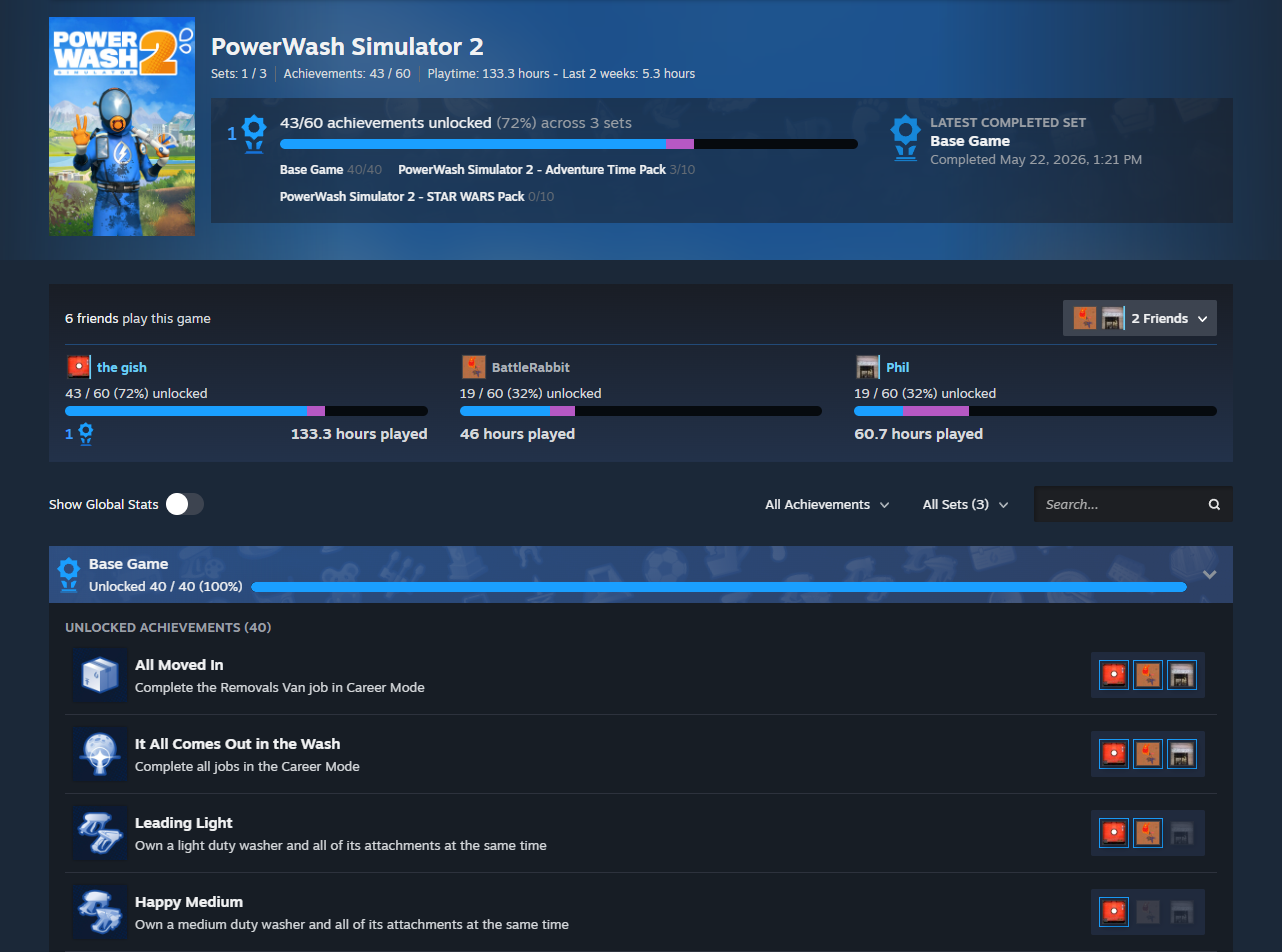
A star-studded roster of games has already adopted the new architecture during the beta launch, including Against the Storm, Dredge, Forza Horizon 5, Euro Truck Simulator 2, Crusader Kings III, PowerWash Simulator, Left 4 Dead 2, and Portal 2.
Why Tim Sweeney Is Hopelessly Lost
The stark juxtaposition between Valve and Epic this week tells you everything you need to know about the future of PC gaming storefronts.
Tim Sweeney continues to view gamers as captive economic units who can be steered by publisher subsidies, exclusivity paychecks, and courtroom theatrics. When Epic tries to diagnose why its store hasn't displaced Steam despite giving away billions of dollars in free games, their answer is to announce that their engineering team is using AI "vibe coding" to make an icon launcher boot in five seconds.
Meanwhile, Valve sits in Bellevue, quietly observing how people actually play games. They notice that completionists feel betrayed when a DLC drops. They notice that gamers love showing off vintage event trophies without punishing their friends who joined late. They realize that gaming is fundamentally social, psychological, and sentimental.
Steam isn't winning because it opens fast. Steam is winning because Gabe Newell built an ecosystem that respects the player’s time, celebrates their triumphs, and preserves their gaming legacy. Until Epic Games understands that, Tim Sweeney can optimize his launcher down to zero milliseconds—and PC gamers will still be alt-tabbing straight back to Steam.