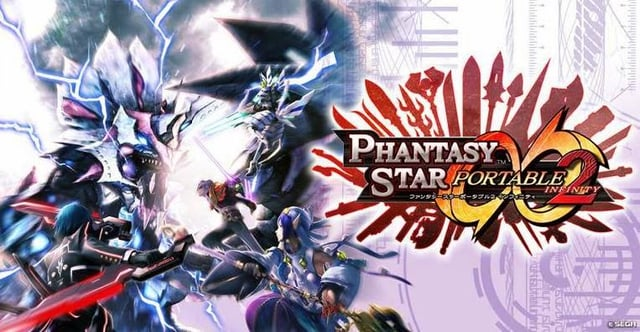

For fans of Sega’s legendary science-fiction action RPG franchise, few titles hold as much sacred, mythical status as Phantasy Star Portable 2 Infinity. Released exclusively in Japan in February 2011 for the PlayStation Portable, Infinity represented the absolute zenith of classic instanced lobby-based Phantasy Star design. Expanding the original PSP2 with the brand-new Episode 2 story, the Duman race, the Rebirth character progression system, thousands of weapons, and boundless procedural Infinity Missions, it remains one of the finest handheld ARPGs ever crafted.
Because Sega never officially localized the expansion to the West, English-speaking players spent years waiting for community fan-translation patches and running the game through the PPSSPP emulator. Yet even on the best emulators, players remained tethered to the physical limitations of 2004 PSP hardware: a single analog nub that forced awkward "claw" camera controls on the D-pad, a hardcoded 30 FPS cap, and complicated external networking tunnels for multiplayer.
Now, developer zmbkilla has accomplished what the community has dreamed of for over a decade: PSP2I_Recomp—a complete, native PC static recompilation of Phantasy Star Portable 2 Infinity.

The psprecomp Revolution: Allegrex MIPS to Native C
Following in the footsteps of recent static recompilation milestones like N64Recomp, PS1Recomp, and XenonRecomp, PSP2I_Recomp is powered by psprecomp—an open-source toolkit designed to statically recompile PlayStation Portable binaries into native C.
The Sony PSP was powered by the MIPS R4000-based Allegrex CPU (running at 222–333 MHz) paired with a specialized Vector Floating Point Unit (VFPU). Instead of interpreting MIPS instructions in real time or relying on JIT compilation at runtime, psprecomp's emitter tool (allegrexrecomp) processes the game’s decrypted EBOOT.BIN offline:
- Ahead-of-Time Translation: Allegrex assembly routines, register states, and branch delay slots are analyzed and translated into portable, human-readable C procedures.
- Native Compilation: The resulting source compiles directly into a standalone 64-bit Windows executable (
psp2i.exe) using Visual Studio and CMake. - Zero CPU Emulation Overhead: The game logic, drop tables, enemy AI, and damage calculation routines run natively at host processor speeds.
Modern PC Enhancements: Right-Stick Camera and 60 FPS
Because PSP2I_Recomp executes as a true native PC application, it fundamentally fixes the greatest mechanical drawbacks of the original PSP release:
1. True Dual-Analog Right-Stick Camera (camera.c)
The original PSP lacked a right analog stick, forcing players to contort their fingers into "the claw" or tap the L-shoulder button to center their view during furious boss battles. PSP2I_Recomp hooks directly into the engine's internal camera yaw and pitch variables, providing silky-smooth 360-degree right-stick camera rotation on modern Xbox, DualSense, and Switch Pro controllers.
2. Unlocked 60 FPS Mode (framerate.c)
While the original PSP hardware was locked to 30 frames per second to preserve battery and fill-rate, the recomp introduces an optional 60 FPS presentation mode. Player movement, weapon swings, Photon Arts, and dodge rolls feel extraordinarily fluid, with the original 30 FPS timing preserved as an option for purists.
3. Direct3D 11 Hardware Rendering (d3d11.c)
The native backend routes the PSP’s graphics pipeline directly into Direct3D 11. Unshackled from the handheld's 480x272 LCD display, the game renders cleanly at native desktop resolutions (1080p, 1440p, 4K) with crisp character models, vibrant Photon weapon glow, and proper aspect ratio scaling.
4. Native Audio & SDL3 Input
Using atrac_ffmpeg.c, the port decodes Sony's proprietary ATRAC3+ audio streams through FFmpeg directly into SDL3 audio buffers, delivering crystal-clear playback of the game's stellar orchestral electronic soundtrack and Japanese voice acting. Full keyboard and mouse bindings are supported alongside XInput and DirectInput controllers.

Built-in RPCN Multiplayer: The Hunter Never Fights Alone
Perhaps the most ambitious feature inside PSP2I_Recomp is its networking layer (rpcn.c, rpcn_rooms.c, online.c). Rather than requiring players to configure third-party Ad-Hoc VPN adapters, the native executable embeds support for RPCN infrastructure matchmaking directly into the client.
Players will be able to create lobbies, join party rooms, and embark on high-difficulty Infinity Missions together over standard internet connections with true modern multiplayer convenience.
How to Build and Play
In accordance with clean-room reverse engineering standards, no Sega proprietary code, decrypted ISOs, or game assets are distributed in the repository. Players must supply their own legally obtained copy of Phantasy Star Portable 2 Infinity:
- Clone the PSP2I_Recomp repository and the psprecomp toolkit.
- Build the
allegrexrecompcompiler using CMake and Visual Studio. - Provide your clean, decrypted
EBOOT.BINfrom your legal copy of the game. - Compile
psp2i.exe, place the required SDL3 and FFmpeg DLLs in your folder, and boot straight into Little Wing.
Run the translation script:
allegrexrecomp.exe emit EBOOT.BIN gen recomp --hooks hooks.txt --fixes fixes.txtThe Preservation Verdict
For fifteen years, Phantasy Star Portable 2 Infinity has been celebrated as one of the greatest hidden gems in Sega's catalog—a masterclass in action RPG progression trapped on a single-analog handheld that never officially crossed the Pacific. By recompiling the game natively for PC with dual-analog controls and 60 FPS rendering, PSP2I_Recomp ensures that Gurhal's finest adventure will be enjoyed by generations of Hunters to come.